
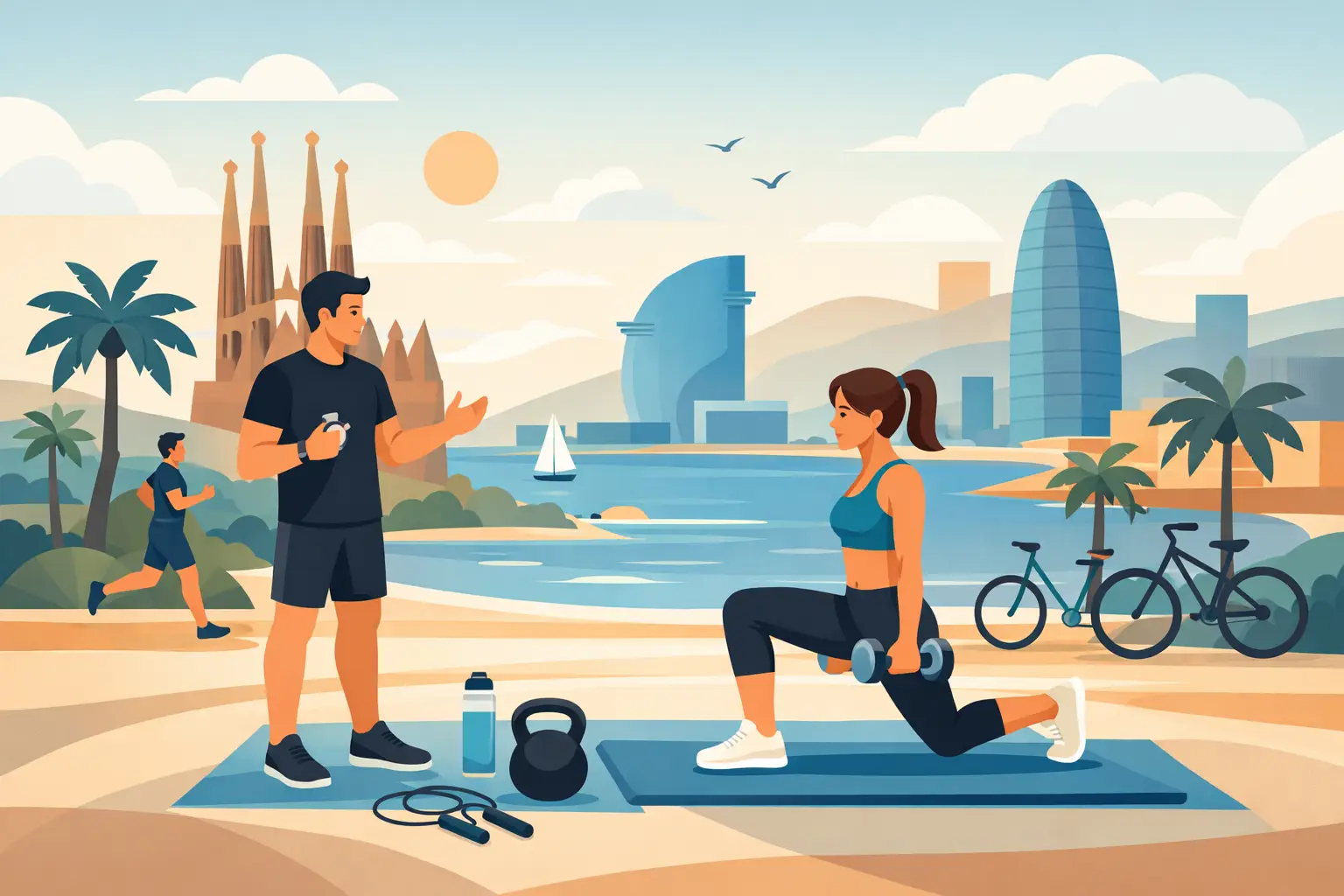
A good training plan should fit into your life, not ask you to reorganise your entire life around it. That is why personal training can make such a difference: you get a clear structure, a coach who knows your goals and someone to keep you moving when work, travel or low motivation would normally get in the way.
For many people in Barcelona, the problem is not a lack of gyms or fitness apps. It is a lack of direction. You may know you want to lose body fat, build strength, run a faster race or simply feel more energetic, but not know what to do first, how hard to train or how to stay consistent. My job is to make those decisions simpler and give every session a purpose.
What personal training should give you
Personal training is more than being counted through a set of squats. It starts with understanding where you are now, where you want to be and what is realistic with the time, equipment and energy you have available.
A beginner may need to build confidence with basic movement patterns, learn how to train safely and establish two reliable sessions each week. Someone with experience may need a more demanding strength plan, better recovery or a programme that supports a marathon, triathlon or other sporting goal. The right approach is different in each case, but both clients need progression rather than random hard workouts.
I build sessions around your starting point. We look at movement quality, current activity levels, injury history, schedule, preferences and the result you want. From there, training becomes specific: strength work to improve body composition, conditioning to improve fitness, mobility where it genuinely helps, and endurance work that has a place in the bigger plan.
The aim is not to leave you exhausted for the sake of it. Some sessions should be challenging, and I will push you beyond the level you would usually reach alone. But the work must also be repeatable. Progress comes from doing the right things consistently, not from one heroic session followed by a week of soreness.
Personal training for real schedules
Busy professionals often believe they need an hour every day before they can get results. Usually, they do not. Two or three focused sessions per week, supported by sensible daily habits, can change strength, fitness and confidence dramatically over time.
Training at home removes a common barrier. There is no commute to a gym, no waiting for equipment and no pressure to perform in front of strangers. A living room, terrace or shared outdoor space can be enough for an effective session. I adapt the programme to what you have, whether that is a full set of weights, resistance bands, a TRX or simply your own bodyweight.
Outdoor training is another strong option in Barcelona. It gives you space, fresh air and a welcome break from the desk or flat. Parks, seafront routes and open areas can work brilliantly for conditioning, running drills, functional strength and small-group sessions. The best location is the one that helps you show up regularly.
If you travel often or live outside Barcelona, online personal training keeps the same principle in place. You receive a bespoke programme, direct coaching and accountability without being tied to a fixed location. This can suit people who are confident exercising independently but want an expert plan, regular check-ins and adjustments when life changes.
The value of accountability
Motivation is useful, but it is unreliable. It rises when you are feeling fresh and drops when work is intense, sleep has been poor or the weather changes. A coach gives you a commitment that does not depend entirely on how motivated you feel that day.
Accountability is not about guilt. It is about having someone notice when you are struggling, help you solve the problem and make sure a missed session does not turn into a missed month. If your diary becomes busy, we adjust. If an exercise is not working for you, we change it. If you are progressing faster than expected, we raise the standard.
That direct relationship also improves technique and effort. It is easy to stop a set early, rush through an exercise or keep using weights that no longer challenge you when nobody is watching. With coaching, you have immediate feedback and a clear reason for what you are doing. Over time, you also learn to train with more confidence on your own.
Training goals need different plans
There is no single best workout for everyone. A plan for fat loss should include strength training to protect or build muscle, conditioning that fits your level and nutritional habits you can maintain. It should not rely on punishing daily cardio or cutting out every food you enjoy.
For strength and muscle gain, the focus is often progressive resistance training, enough recovery and eating to support the work. The details matter: exercise selection, volume, load, form and the way sessions develop from week to week. Simply doing more is not always better.
Running and race preparation require an equally considered approach. I have completed Ironman triathlons, marathons and endurance events, so I understand that endurance training is not just about adding kilometres. You need the right balance of easy running, quality sessions, strength work, recovery and race-specific preparation. Too much intensity too early is one of the quickest ways to lose consistency through fatigue or injury.
For couples and friendship groups, small-group training can provide extra energy and a shared commitment without losing the personal element. Sessions for up to four people can be adapted so that everyone works at the appropriate level, even when goals and fitness levels differ.
Nutrition should support your training
Training works better when your food supports it. That does not mean following a rigid meal plan you cannot keep up for more than two weeks. It means creating enough structure to make better choices more often.
For some clients, the priority is eating enough protein and planning meals around a demanding work schedule. For others, it is understanding portions, reducing mindless snacking or fuelling properly before a long run. The most useful nutrition coaching is practical. It should work with your preferences, social life and routine, rather than treating normal life as a failure of discipline.
Results are rarely built through perfection. They are built through repeatable habits: preparing a few meals, keeping useful food at home, drinking enough water and knowing how to handle a restaurant meal or a busy week without giving up completely.
How to get more from your coach
Be honest from the beginning. Tell your trainer what you enjoy, what you dislike, how much time you truly have and what has stopped you in the past. There is no benefit in pretending you will train five days per week if two is the realistic number. A plan you follow is always better than an impressive plan you abandon.
It also helps to measure progress in more than one way. The scales can be useful, but so can waist measurements, strength numbers, running pace, photos, energy levels, sleep and how your clothes fit. Some weeks your bodyweight may barely move while your strength and shape improve. Context matters.
Finally, give the process time. You may feel fitter within a few sessions, but meaningful physical change is earned through weeks and months of consistent work. The goal is to create a routine that still works when work gets busy, when you go on holiday or when motivation is not at its highest.
Whether we train in your home, outdoors in Barcelona or remotely from anywhere in the world, the standard stays the same: clear coaching, a plan built for you and steady progress you can be proud of. Start where you are, commit to the next session, and let the results build from there.