
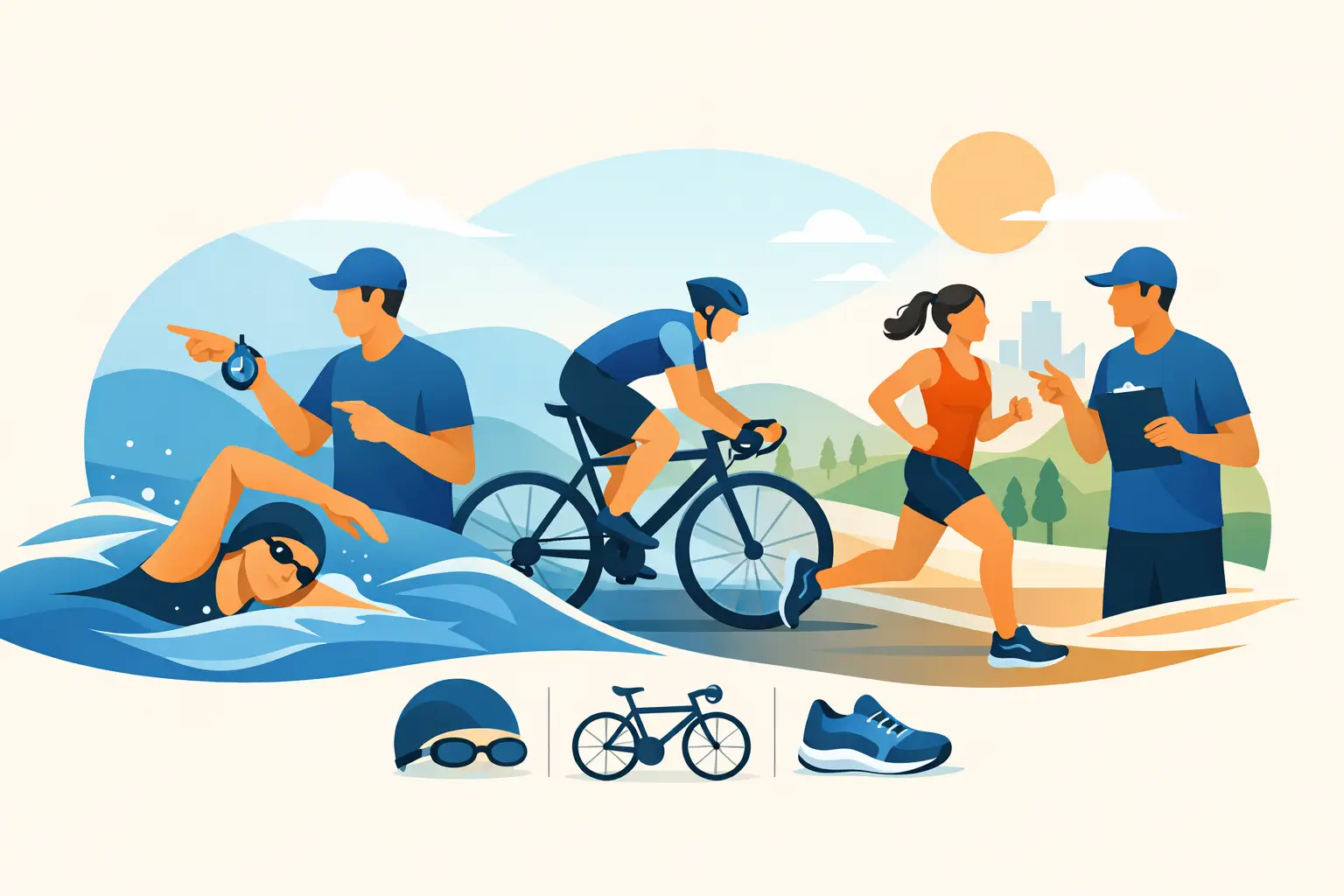
Your first triathlon is not three separate fitness challenges squeezed into one morning. It is a test of pacing, preparation and staying calm when your legs feel different after the bike than they did on the run. A triathlon coach for beginners helps you prepare for that reality, with a plan that fits your current fitness, your diary and the race you have chosen.
You do not need to be an elite swimmer, own an expensive bike or train twice a day to complete a first event. You do need a sensible structure. The right coaching removes the guesswork, builds confidence in each discipline and makes sure your enthusiasm does not turn into an injury before race day.
Why beginners benefit from triathlon coaching
Most first-time triathletes are stronger in one discipline and less comfortable in another. Perhaps you run regularly but have not swum since school. Perhaps you cycle around Barcelona at weekends but feel anxious about open water. Or perhaps the thought of putting all three together feels overwhelming.
Training alone can work, but it is easy to make predictable mistakes. Beginners often train their favourite discipline too much, ignore technique, add volume too quickly or treat every session as a hard session. A coach gives each workout a purpose. Some sessions build aerobic fitness, some improve skills, and some teach you how to manage the transition from one sport to the next.
That structure matters even more if you have a demanding job, travel regularly or are fitting training around family life. A good plan should not ask you to live like a professional athlete. It should make the most of the time you genuinely have available and adjust when life gets busy.
What a triathlon coach for beginners should provide
The best coaching starts with a conversation, not a generic twelve-week programme. Before I write a plan, I want to know your race date and distance, your training history, previous injuries, confidence in the water, available equipment and the number of sessions you can realistically complete each week.
A beginner preparing for a sprint triathlon may need three to five focused sessions weekly. Someone entering an Olympic-distance event may need more time, particularly if swimming is new to them. The aim is not to fill every spare hour. It is to choose the sessions that create the greatest progress while leaving enough recovery for you to remain consistent.
Your programme should include all three disciplines, but the balance will change as you improve. Early on, a swimmer who lacks confidence may benefit more from regular short technique sessions than one long, exhausting swim. A runner returning from injury may need strength work and carefully controlled run volume before speed sessions make sense.
Good coaching also includes accountability. A plan on your phone is useful, but direct feedback changes how you follow it. You can ask questions after a difficult ride, share how your body is responding and make changes before a minor issue becomes a bigger setback. That personal contact is particularly valuable for first-time racers, who often do not know what is normal fatigue and what needs attention.
Build the engine, then practise the details
Endurance is the foundation of triathlon, but beginners sometimes mistake endurance training for constant hard effort. Most sessions should feel controlled enough that you could hold a short conversation. This develops the aerobic base that lets you train consistently, recover well and still have energy for the final run.
Harder work has its place, but it needs to be earned. Once your technique and basic endurance are improving, intervals can develop speed and confidence. The exact amount depends on your background. A naturally fit runner may cope with quality work earlier than someone who is completely new to structured exercise, but neither benefits from being pushed flat-out every day.
Strength training is also useful, especially for athletes who sit at a desk for long periods. Stronger hips, glutes, core and upper body improve posture on the bike, support efficient running and make swimming mechanics easier to maintain when tired. It does not need to mean long gym sessions. Well-chosen bodyweight, resistance or functional exercises can make a real difference.
At AB Fitness, I use that same practical approach whether we train outdoors in Barcelona, at home or remotely. Your plan should work in your real environment, not rely on perfect conditions that rarely exist.
Swimming confidence comes before swimming speed
Swimming is the discipline that causes the most concern for many beginners, and it deserves patience. Fitness alone does not guarantee an efficient swim. Breathing rhythm, body position, relaxed movement and basic stroke timing can save far more energy than simply trying to swim harder.
Pool sessions are the right place to develop those skills. You can pause, repeat drills and build distance gradually without the added pressure of waves, other swimmers or limited visibility. Once you are comfortable, open-water practice becomes essential if your race is in open water. It teaches you how to sight, start in a group, manage a wetsuit and stay composed when conditions are less predictable.
There is no prize for rushing this stage. If open water makes you panic, work on it gradually with appropriate supervision and never train alone. Confidence is a performance tool. A calm swimmer exits the water with far more energy for the bike and run.
The bike is where pacing becomes real
For a first triathlon, the bike leg is often the longest part of the day. It can feel tempting to push hard because your legs are fresh after swimming, but that is where many beginners spend energy they need later.
Your coaching plan should teach you how different effort levels feel. Easy rides build endurance. Short, controlled efforts can improve strength and speed. Longer rides help you practise eating, drinking and staying comfortable on the bike. You do not need the most expensive equipment, but you do need a bike that is safe, correctly adjusted and familiar to you.
Basic bike handling also deserves attention. Practise drinking while moving, changing gears before a hill rather than halfway up it, braking smoothly and riding confidently around other people. These are small skills, but they reduce stress on race day.
Do not leave the run until last
The run comes last, but it should not be an afterthought. Running on tired legs feels unfamiliar at first, even for capable runners. Brick sessions – a bike followed by a short run – are useful because they teach your body and mind to make that transition.
They do not need to be punishing. In fact, a ten- or fifteen-minute easy run after a bike can be enough for a beginner to learn how their stride changes. Over time, you can add race-specific effort, but the goal is controlled adaptation rather than exhaustion.
Running is also the discipline most likely to expose poor load management. If your calves, knees or shins are repeatedly sore, adding more miles is rarely the answer. We would look at training load, footwear, recovery, strength and running mechanics before deciding what to change.
Race-day practice prevents avoidable stress
A first triathlon has plenty of moving parts: registration, transition layout, nutrition, clothing, timing chip, bike checks and the order in which everything happens. You do not want race morning to be the first time you think about them.
Your preparation should include simple rehearsals. Set out your transition kit at home. Practise putting on your helmet before touching your bike. Try the socks, shoes and nutrition you intend to use. Learn what you will eat before the start and what you can comfortably drink during the event. Nothing new on race day is not a glamorous rule, but it is a useful one.
I also encourage beginners to set more than one goal. Finishing is a strong goal. Feeling calm in the swim, pacing the bike sensibly or running the final kilometre with control are equally valuable targets. They keep the experience positive and give you a clearer sense of progress than a finishing time alone.
How to choose the right coach
Look for a coach who listens before prescribing, explains the reason behind the work and is comfortable adapting the plan. Credentials and race experience matter, but communication matters just as much. You should feel able to say when a session was too difficult, when work has taken over or when you are nervous about a particular part of the event.
Ask how feedback works, whether nutrition and strength are considered, and how the coach handles missed sessions. A rigid plan can look impressive on paper but fail in real life. The right coach keeps standards high while making sensible adjustments, so one busy week does not become a reason to quit.
Your first triathlon does not require perfection. It requires a steady build, honest communication and the willingness to practise the parts that feel uncomfortable. Start where you are, train with purpose, and by race day you will have more than fitness – you will know exactly what you are capable of.