
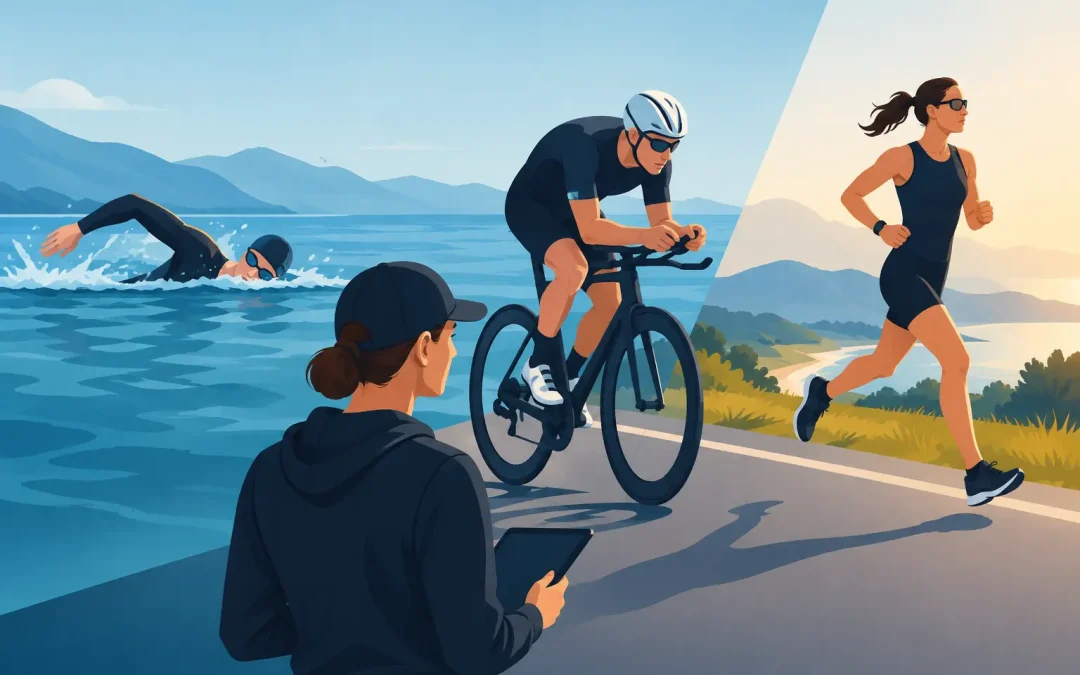
An Ironman is not won by finding the hardest plan online and forcing your life around it. It is built through months of sensible decisions: knowing when to push, when to recover, what to eat around demanding sessions and how to stay consistent when work, travel or family plans change. That is what Ironman performance coaching should provide – a programme that prepares you properly without turning the rest of your life upside down.
I have completed Ironman triathlons myself, alongside marathons and other endurance disciplines, and I know that confidence on race day comes from more than fitness. It comes from arriving healthy, rehearsed and clear about what you need to do from the swim start through to the final kilometres of the marathon.
What Ironman Performance Coaching Should Actually Do
A generic triathlon plan can give you sessions. Coaching gives those sessions a purpose. The difference matters when training time is limited, your background is uneven across the three disciplines, or fatigue starts to build.
Your plan should begin with an honest picture of where you are now. That includes your available training hours, current swim ability, cycling confidence, running history, previous injuries, equipment, work schedule and race target. An athlete with a strong running background but limited open-water experience needs a very different focus from a confident cyclist preparing for their first marathon off the bike.
From there, I structure training around the essential building blocks: swim technique and endurance, bike strength and pacing, run durability, transitions, strength work, fuelling and recovery. The aim is not to cram every possible session into the week. It is to make each session earn its place.
For many busy athletes, three quality sessions and a well-planned long ride will move the needle further than a week of ambitious training followed by exhaustion. Consistency beats occasional heroics.
Build the Race in Phases, Not in Panic
Ironman preparation is a long project. Trying to train at race intensity all year is a quick route to burnout, illness or injury. A good programme changes as the race gets closer.
Create a base you can rely on
The early phase develops aerobic fitness, movement quality and routine. This is where steady swimming, controlled cycling, easy running and strength training do a great deal of useful work. Easy does not mean pointless. It is where you develop the engine that supports everything later.
For newer triathletes, this phase may also include learning the practical skills that often cause unnecessary stress: pool pacing, sighting in open water, changing gears efficiently, riding confidently in groups where relevant and running at a controlled effort rather than chasing every watch alert.
Strength work is valuable here and throughout the season. You do not need to spend hours lifting heavy weights, but targeted work for the legs, hips, core, shoulders and upper back can improve resilience and help maintain good form when fatigue sets in. It is particularly useful for athletes who spend much of the day at a desk.
Add race-specific work at the right time
As fitness improves, training becomes more specific. Bike sessions may include sustained efforts close to planned race intensity. Runs may include controlled tempo work, while brick sessions teach your legs how to run after riding. Swim training shifts towards the distance, pace and conditions you will face.
Brick sessions are useful, but they are not a test of toughness every week. A short, purposeful run after a bike ride can teach pacing and fuelling without leaving you depleted. The longer race rehearsals come later, when your body is ready for them.
The right amount of intensity depends on your history. An experienced athlete targeting a time goal may need more structured threshold work. A first-time Ironman athlete often benefits more from building endurance, practising nutrition and staying uninjured. Both approaches are performance coaching. Performance is relative to the athlete and the goal.
Taper with confidence
The final weeks are not the time to chase lost fitness. Training volume reduces so that fatigue can lift, while a small amount of quality work keeps you sharp. Many athletes feel restless during a taper because they are used to doing more. That feeling is normal. The goal is to arrive fresh, not to prove your fitness in the week before the race.
Nutrition Is Part of the Training Plan
You cannot separate Ironman training from nutrition. Long sessions place real demands on energy intake, hydration and recovery. Getting this wrong can make a well-designed programme feel much harder than it should.
Daily nutrition should support your workload and body-composition goals without becoming unnecessarily restrictive. On lighter days, meals can be simpler and based around quality protein, vegetables, fibre-rich carbohydrates and healthy fats. Before and after longer or harder sessions, carbohydrate intake becomes more important. The exact amount depends on the training load, the athlete and how their body responds.
Race fuelling needs practice, not guesswork. Your stomach has to learn what it can tolerate while swimming, cycling and running under effort. We test drinks, gels, bars and real-food options during key sessions, along with fluid and electrolyte intake. Race day is not the place to try a new product because someone in a Facebook group swears by it.
A fuelling strategy should also be realistic. If you struggle to eat solid food on the bike, the plan must reflect that. If a hot race is likely, hydration and sodium need more attention. If the event has a hilly bike course, your effort and fuelling plan must account for the extra demand.
Recovery Is Training, Not a Reward
Most Ironman athletes understand that long rides matter. Fewer take recovery seriously enough until their body forces the issue. Sleep, rest days, mobility, sensible strength work and enough food are all part of the programme.
I look for warning signs early: an unexplained drop in pace, poor sleep, persistent soreness, an elevated sense of effort or a growing dread of sessions that you would normally enjoy. One difficult day is not a problem. Several difficult days in a row require attention.
Sometimes the best adjustment is to reduce a session. Sometimes it is to move it around a busy week. This is not lowering standards. It is intelligent coaching. Training needs to fit the athlete in front of me, rather than an idealised calendar with no meetings, flights or late nights.
Coaching for Barcelona and Remote Athletes
If you are based in Barcelona, practical training can happen outdoors, at home or in a setting that suits your routine. We can work on running form, strength, mobility, transitions and the habits that support your endurance work without requiring a fixed gym membership.
For remote athletes, regular check-ins and a bespoke plan keep the process clear wherever you are training. The value is not just receiving a schedule. It is having someone who can adjust it when a work trip disrupts your long ride, an injury concern appears or your fitness improves faster than expected.
At AB Fitness, I work with athletes from different starting points, including runners moving into triathlon and experienced competitors looking for more structure. You do not need to be an elite athlete to benefit from a performance-minded approach. You need a goal, a willingness to train consistently and a plan built around your actual life.
The Details That Make Race Day Calmer
A successful Ironman is usually decided by the small details completed well before the start line. Open-water practice helps you settle into the swim rather than wasting energy fighting nerves. Bike position and comfort matter because six hours in the saddle exposes every minor issue. Pacing targets need to be realistic enough that you can still run with control.
Transitions deserve rehearsal too. Know what you will wear, what you will eat, where your essentials will be and how you will respond if something goes wrong. Conditions can change, mechanicals happen and nerves are normal. Preparation does not remove uncertainty, but it gives you a calm response when the day is not perfect.
The strongest Ironman performance is rarely dramatic. It is patient swimming, controlled cycling, steady fuelling and a marathon paced with enough discipline to keep moving well late in the day. Start with the training week you can repeat, build confidence session by session, and let race day become the natural outcome of the work you have already done.