
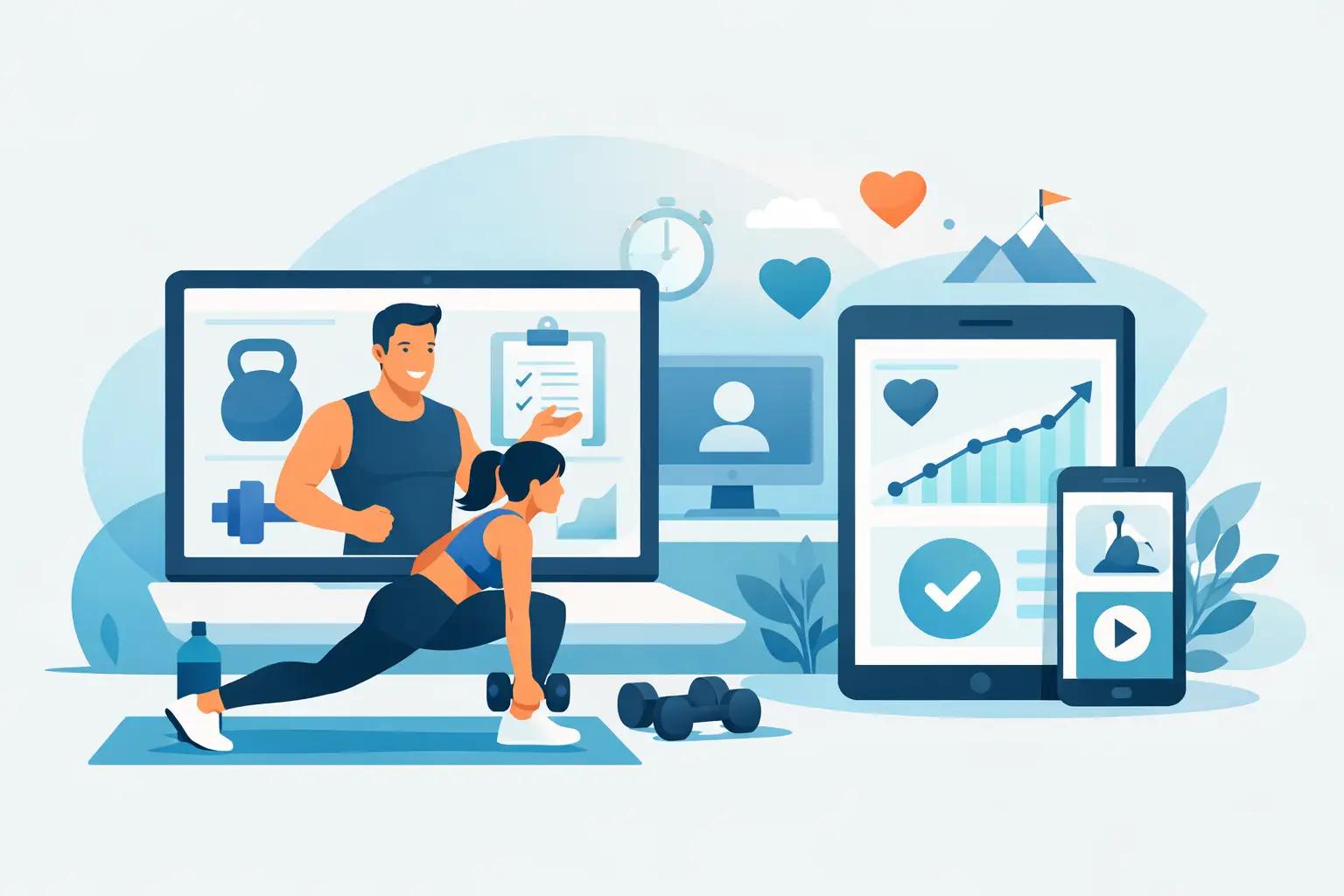
A good training plan should not fall apart because you have a busy week, a work trip or no desire to spend an hour commuting to a gym. Online coaching gives you a clear structure, direct support and a programme built around the way you actually live. You still need to do the work, of course. My job is to make sure that work has a purpose.
For many people, the problem is not a lack of fitness information. There is more free advice available than ever, much of it contradictory. The problem is knowing what applies to you, following it consistently and adjusting before a small setback becomes a reason to stop. That is where a real coach makes the difference.
What online coaching should give you
Online coaching is not a generic PDF and a weekly motivational message. It is a working relationship between coach and client, with training, nutrition and accountability shaped around a specific goal.
Your goal might be to build strength, lose body fat, feel more confident in your body, run your first 10K or prepare properly for a marathon. You may want to train around long office hours, family commitments or frequent travel. You may be returning after time away from exercise, or already training regularly but no longer seeing results. The right programme looks different in each case.
I begin by understanding your starting point: your training history, current fitness, injuries or limitations, equipment, schedule, food habits and the result you want to achieve. From there, I create a plan that is demanding enough to create progress but realistic enough to follow. There is little value in a perfect six-day programme if your life only gives you three reliable sessions.
A well-built remote plan also removes wasted effort. Instead of changing workouts every week because a fitness app suggests it, you know what you are doing, why you are doing it and how to progress it. That may mean adding load, improving technique, increasing repetitions, running faster at the same effort or simply training consistently for the first time in months.
Online coaching for busy lives
Training at home, outdoors, in a hotel gym or at a local fitness centre can all work. The location matters far less than the quality of the plan and your ability to keep showing up. I design sessions around the equipment you have, whether that is a full gym, adjustable dumbbells, resistance bands, a TRX or just enough space for bodyweight training.
This is particularly useful for professionals whose diary changes every week. If you miss a session because of a late meeting, we do not treat the whole plan as a failure. We adapt. A good coach looks at the week ahead, protects the most important sessions and makes sensible decisions rather than asking you to compensate with punishing workouts.
For clients in Barcelona, online support can also work alongside face-to-face training. You might see me for technique, strength work or a running session, then follow your own structured sessions between appointments. For clients elsewhere, the same coaching relationship can happen entirely remotely, in English, French or Spanish.
Your programme needs more than workouts
A training plan is only useful when it fits the person following it. That is why I do not separate exercise from the rest of your routine.
Nutrition support should be practical, not restrictive. You do not need a complicated menu or foods you dislike. You need an approach that matches your goal, your appetite, your working day and your social life. For fat loss, that may mean establishing a manageable calorie deficit while keeping protein high and meals satisfying. For strength, endurance or race preparation, it may mean eating enough to recover, perform and avoid the cycle of under-fuelling followed by overeating.
Accountability is equally important. Knowing that somebody will review your training changes the decision you make when motivation is low. Regular check-ins give us a chance to look beyond the scale. We can assess energy, sleep, strength, running pace, measurements, confidence, digestion and how your clothes fit. Progress is rarely perfectly linear, but it should be visible over time.
I also want clients to understand their plan. You should know how hard a session is meant to feel, what good technique looks like and when to push versus when to pull back. This builds confidence and makes you less dependent on quick fixes.
Support that responds to real progress
Your programme should change when your body and circumstances change. If a movement causes pain, we find an alternative rather than forcing it. If you are progressing faster than expected, we can move forward. If work stress, poor sleep or travel is affecting recovery, we adjust the training load before fatigue builds up.
That is the difference between personal coaching and simply being given a plan. The programme is not fixed in stone. It is a tool that evolves with you.
Is remote training right for you?
Online coaching works extremely well if you are prepared to communicate honestly and complete sessions independently. You do not need to be experienced. Beginners often benefit most from having a clear starting point and regular guidance. Experienced exercisers benefit from better structure, progressive programming and an objective eye on their habits.
It is especially effective for people who want flexibility without losing standards. You can train before work, during a lunch break or in the evening without coordinating every session with a trainer. You still have support, but you gain the confidence to train under your own steam.
There are occasions when in-person coaching is the better starting point. If you are very unsure about technique, have a significant injury history, or feel that you will not train without someone physically present, face-to-face sessions may give you more value. A hybrid approach is often ideal: learn the key movements in person, then use online coaching to stay consistent between sessions.
For endurance athletes, remote coaching can be particularly powerful. Marathon, triathlon and race preparation require more than accumulating kilometres. Your plan needs to balance endurance sessions, strength work, recovery, pacing and nutrition. I use my own experience across Ironman triathlons, marathons and multi-sport training to help clients prepare with intent rather than simply hoping fitness will appear on race day.
How to get the most from your coach
The strongest coaching relationships are straightforward. Be clear about what you want, but also be honest about what you can commit to. A programme built around three consistent sessions will take you further than an ambitious plan you abandon after ten days.
Share the information that matters: whether you slept badly, skipped meals, feel unusually tired or have discomfort during an exercise. None of this is a failure. It helps me coach you properly. Send training updates, ask questions when you are unsure and tell me when something is working well. The more accurate the feedback, the better the adjustments.
Set outcome goals, but pay attention to process goals too. Losing a certain amount of body fat or completing a race can be motivating, yet the actions that get you there are simpler: completing your planned sessions, preparing meals, walking more, getting enough sleep and recovering well. These habits are what make results last.
At AB Fitness, I keep online coaching personal because that is what clients need. You are not another profile in an app or a name on a spreadsheet. You have a schedule, preferences, strengths and obstacles, and your training should reflect them.
Start with the level you can sustain this week. Train with focus, report back honestly and allow the plan to develop as you do. Consistent effort, guided well, can take you much further than another short burst of motivation.