
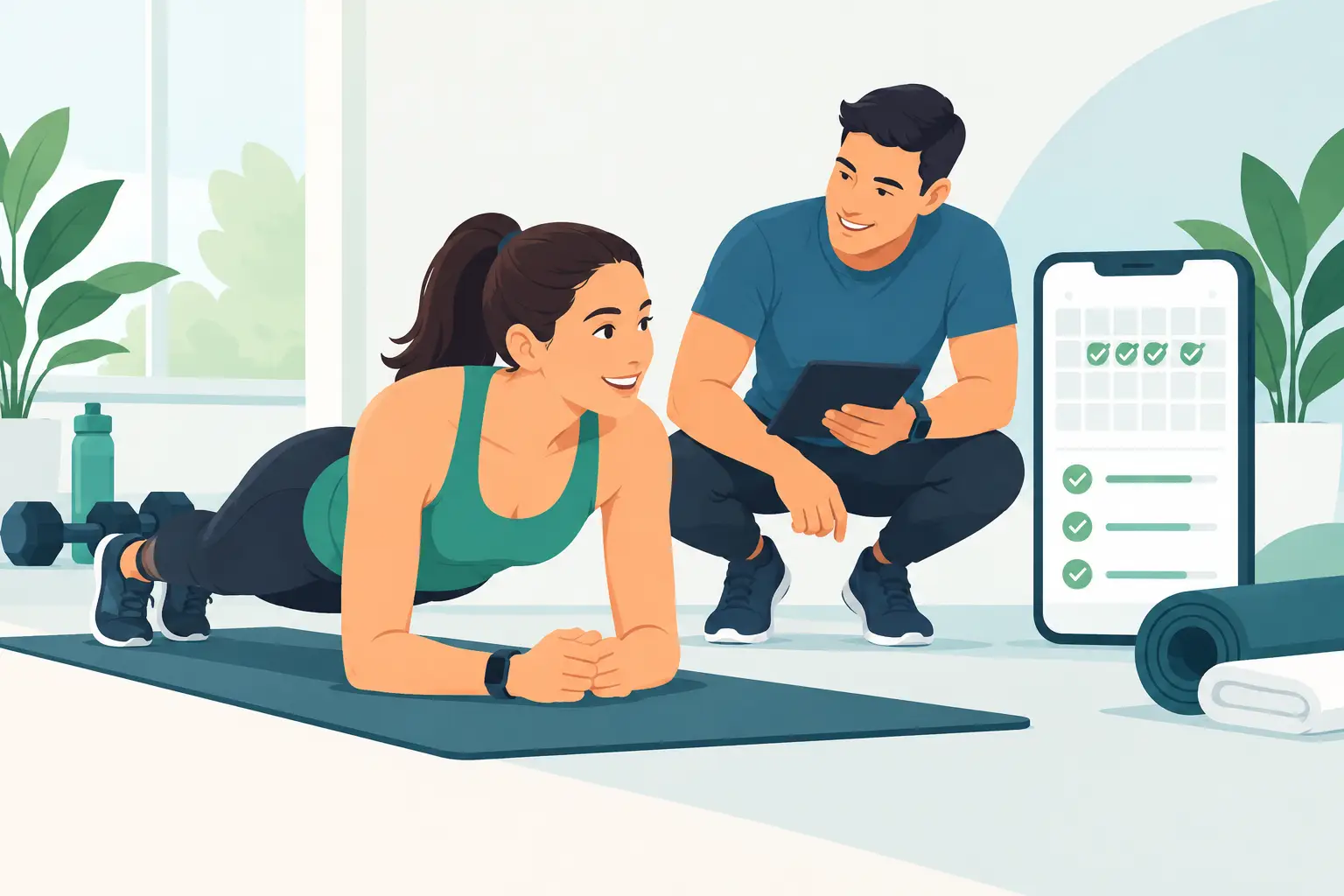
A busy week in Barcelona can dismantle even the best intentions. A late meeting becomes a missed session, dinner out becomes three days off plan, and the run you meant to do on Saturday gets pushed into next week. Fitness accountability is what stops that familiar cycle from becoming your routine.
It is not about being told off for missing a workout. It is having someone who knows what you are working towards, understands the reality of your schedule, and expects you to keep moving forwards. For some people, that means a trainer waiting at their home or local park. For others, it means a clear remote plan and a check-in that brings attention back to the work.
What fitness accountability really means
Accountability is often reduced to motivation. Motivation helps, but it is unreliable. You may feel highly motivated after buying new trainers, seeing a race advertised or deciding that this is the month you will get fitter. That feeling naturally fades when work gets demanding, sleep is poor or progress feels slower than expected.
Real accountability creates a system that works when enthusiasm is low. It gives your training a place in the week, sets an appropriate target, and makes adjustments before one difficult week turns into a month away from exercise. The focus is not perfection. It is consistency, honest feedback and a plan that fits your actual life.
As your coach, I need to know more than how many sessions you completed. Did your knees feel uncomfortable on the run? Are you travelling next week? Have you been skipping lunch and then overeating in the evening? Is your goal to build confidence in the gym, complete a half marathon, lose body fat or simply have more energy for a demanding job? These details shape the programme.
That is why generic workout apps can only take you so far. They may provide exercises, timers and reminders, but they do not see when the plan is too ambitious, too easy or no longer relevant. They cannot ask the useful question: what got in the way, and what should we change?
Why willpower is not a training plan
Willpower has a role, particularly at the start. You still need to put your trainers on and begin. But relying on discipline alone puts every decision back on you: when to train, what to do, how hard to work, whether to rest, and whether a missed session matters. By the end of a long working day, that is a lot of friction.
A tailored plan removes unnecessary decisions. If you have a 45-minute strength session at home on Tuesday and an outdoor interval session on Thursday, you know what is expected. If the week changes, the plan changes with it. You do not abandon it because one session did not happen exactly as planned.
There is also a useful difference between accountability and pressure. Pressure can make training feel like another obligation you are failing to manage. Good coaching should be demanding without being rigid. I will encourage you to work beyond the comfort zone that keeps progress stalled, but I will not treat every missed workout as a character flaw. Illness, family commitments, work travel and recovery all matter.
The right kind of support depends on your life
Some clients need the certainty of an in-person appointment. When I arrive at your home, meet you outdoors or train you in a small group, the session is in the diary and the effort is shared. This can be particularly effective if you are new to exercise, have lost confidence, or keep putting your own health at the bottom of the list.
Training at home also removes a common barrier. There is no journey across the city, no crowded gym floor and no uncertainty about what equipment to use. A well-designed session can use bodyweight, resistance bands, dumbbells, TRX or whatever is practical in your space. The quality comes from the programming and coaching, not from having every machine available.
For busy professionals and people who travel regularly, remote coaching may be the better fit. You still have a bespoke programme, regular contact and a clear standard to work towards, but you can train in a hotel gym, a local park or your own living room. Remote accountability works best when communication is honest. A plan only helps if I know what you completed, what felt difficult and what needs adapting.
Small-group training can add another layer. Training with a partner or friends makes it easier to show up, and it brings a positive competitive edge. It is a strong option for couples or colleagues, provided the sessions are adapted properly. Two people can train together without being expected to lift the same weight, run at the same pace or pursue exactly the same goal.
How direct coaching keeps progress visible
Progress is not always obvious in the mirror, especially in the first few weeks. That is where structured tracking matters. Depending on your goal, we might monitor strength levels, body measurements, running pace, mobility, sleep, bodyweight trends, training consistency or how your clothes fit. One number rarely tells the full story.
For fat loss, the scale can move slowly or fluctuate for reasons that have nothing to do with failure. For strength, adding a little weight, improving technique or completing more controlled repetitions can be a major win. For endurance training, an easier heart rate at the same pace may show your fitness is developing before your race times change.
Check-ins turn these observations into decisions. If you are recovering well and progressing consistently, we can increase the challenge. If your energy is dropping, your form is deteriorating or work has become intense, we may reduce volume while maintaining the habit. This is how training remains sustainable rather than becoming an all-or-nothing cycle.
Nutrition deserves the same practical approach. A restrictive meal plan that does not suit your workday, preferences or social life is unlikely to last. Rather than chasing a perfect diet, we can build a structure around protein, meal timing, portions and food choices that support your goal. Accountability here is not about guilt after a restaurant meal. It is about returning to the habits that work at the next meal.
Building fitness accountability into your week
The best system is simple enough to repeat. Start by choosing a realistic number of sessions. If you currently train once every few weeks, committing to six hard sessions is more likely to create frustration than results. Two planned sessions completed consistently will achieve far more than an ambitious programme that lasts ten days.
Next, make the sessions specific. “Exercise more” is not a commitment. “Strength training at home at 7.30am on Tuesday and Thursday” gives you a clear action. Keep a backup option as well. If an evening session is cancelled by work, could you complete a 25-minute home workout the next morning? Flexibility protects consistency.
Be honest about the barriers you repeatedly face. If evenings disappear into social plans, train before work. If you dislike gyms, train outdoors or at home. If you get bored, vary the format with strength, boxing-style conditioning, running, mobility or bodyweight work. If you are preparing for a marathon, triathlon or another event, your plan needs enough structure to build performance without ignoring recovery.
Finally, do not wait until you have had a bad month to ask for help. Accountability is most valuable before motivation disappears. At AB Fitness, the aim is to give you direct support, a programme built around your goal and the standards that turn effort into measurable progress.
Your next session does not need to be heroic. It needs to happen, suit your current level and give you a reason to come back for the one after it.