
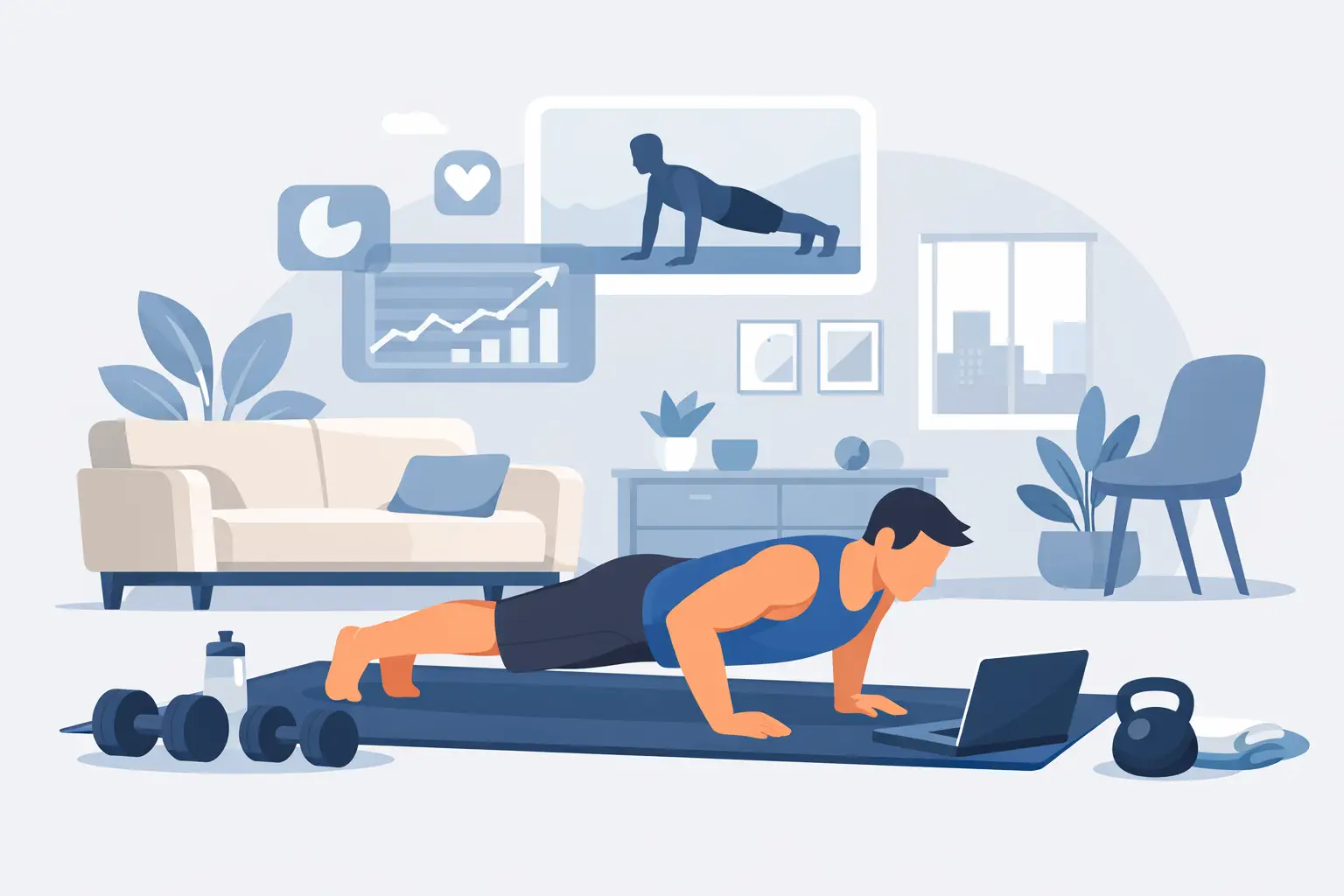
A bodyweight training programme at home should not feel like a compromise because you do not have a gym membership or a spare hour to travel. Done properly, it is a structured way to build strength, improve fitness, lose body fat and feel more capable in your own body, using the space you already have.
The key is not finding the hardest online workout. It is choosing exercises that match your current level, doing them with good technique, and progressing them over time. Whether you are training in a Barcelona flat, outside in the park, or following a remote plan while travelling, consistency beats random high-intensity sessions every time.
Start with the outcome you want
Before selecting a single exercise, decide what the programme needs to do for you. If your main goal is body composition, you need regular strength sessions alongside sensible nutrition, daily movement and enough recovery. If you want to feel fitter for running, cycling or an upcoming race, your home training should strengthen the legs, trunk and upper body without leaving you too fatigued for your key endurance sessions.
For complete beginners, the first target may simply be establishing a routine and learning how to move well. For more experienced people, bodyweight work can still be demanding, but the challenge comes from exercise selection, tempo, range of movement, unilateral work and intelligent programming rather than adding endless repetitions.
I build programmes around what a client can genuinely sustain. A four-day plan looks impressive on paper, but three focused sessions that fit around work, family and social life will produce better results than a plan you abandon after ten days.
What makes a home programme effective?
A good home session includes a squat or lunge pattern, a push, a pull where possible, a hip-dominant movement, core work and some conditioning. You do not need to cram every variation into one workout, but the week should cover these movement patterns.
Pulling is often the difficult part at home because press-ups require no equipment, while rows usually need something to pull against. A sturdy table, resistance band, suspension trainer or pull-up bar can help. If you have no equipment at all, you can still train your back with prone holds, reverse snow angels and controlled floor work, although a simple resistance band gives you more options as you get stronger.
Technique matters. A press-up only counts if you can keep your body in a strong line rather than letting your hips drop. A squat should be controlled, with your knees tracking comfortably over your toes and your feet grounded. There is no prize for rushing poor repetitions. Move with intent, use a full comfortable range, and stop a set when your form starts to disappear.
Your weekly bodyweight training programme at home
For most busy adults, start with three full-body sessions per week on non-consecutive days. Monday, Wednesday and Friday works well, but the exact days do not matter. Each session should take around 30 to 45 minutes including a short warm-up.
Begin every workout with five minutes of movement: marching or jogging on the spot, hip circles, arm circles, bodyweight squats, gentle lunges and a few easy press-ups against a wall or kitchen worktop. You should feel warmer and more mobile, not exhausted before the training begins.
Session A: strength foundations
Complete three rounds, resting for 45 to 75 seconds between exercises as needed. Start conservatively and keep one or two good repetitions in reserve.
- Bodyweight squats – 10 to 15 repetitions
- Incline press-ups on a worktop, bench or sofa – 8 to 12 repetitions
- Reverse lunges – 8 to 10 repetitions per leg
- Glute bridges – 12 to 15 repetitions
- Front plank – 20 to 40 seconds
If standard squats feel easy, slow the lowering phase to three seconds. If incline press-ups become comfortable, lower the surface over time until you can perform press-ups from the floor. Small changes create a real training effect.
Session B: legs, posture and core
Complete three rounds with controlled repetitions. If you own a resistance band, add band rows for 10 to 15 repetitions after the split squats.
- Split squats – 8 to 12 repetitions per leg
- Pike press-ups or incline press-ups – 6 to 10 repetitions
- Single-leg glute bridges – 8 to 12 repetitions per leg
- Prone Y-T raises – 8 to 12 slow repetitions
- Dead bugs – 8 to 10 repetitions per side
The Y-T raise is not flashy, but it is useful for people who spend long days at a laptop. Keep your neck relaxed and focus on moving from the upper back rather than shrugging your shoulders towards your ears.
Session C: fitness without losing control
This session raises your heart rate while retaining quality movement. Perform 30 seconds of work followed by 30 seconds of rest for each exercise. Complete three to five rounds, depending on your fitness level.
- Squat to calf raise
- Alternating reverse lunge
- Press-up variation
- Mountain climbers, slow and controlled
- Plank shoulder taps
You do not need burpees every session to get fit. They can be useful for some people, but they are not compulsory and are often performed badly when fatigue takes over. If you live in a flat or need a low-impact option, keep both feet close to the floor and use brisk marching, step-ups or fast bodyweight squats instead.
How to make bodyweight training harder
Progress is the part most people miss. Repeating the same ten squats and five knee press-ups for months may maintain a habit, but it will not keep building strength. Track what you do in a notebook or on your phone so you know when it is time to move forward.
First, add repetitions within the prescribed range. Then add a set, slow the tempo, shorten the rest period or choose a more difficult variation. For example, progress from a chair squat to a full squat, then to a split squat, and later to a Bulgarian split squat using a sofa or chair behind you. With press-ups, move from wall press-ups to an incline, then the floor, then close-grip or tempo variations.
One change at a time is enough. If you make every exercise harder, double your volume and cut rest periods in the same week, your joints and motivation may object. The right pace depends on your training history, sleep, stress and any injuries.
Do not ignore recovery and nutrition
Training at home makes it easy to fit a session into a busy day, but it also makes it easy to train hard every day because there is no journey home from the gym to create a natural break. Your muscles improve when you recover. Keep at least one rest day each week, prioritise sleep, and include walking or easy cycling for general movement.
Nutrition should support the goal rather than punish you for eating. For fat loss, a manageable calorie deficit, regular protein-rich meals and consistency are more useful than cutting out every food you enjoy. For strength or endurance goals, eating too little will make training feel harder and recovery slower. The best approach is one you can follow during a normal working week, not just for a short burst of motivation.
When a tailored plan is worth it
A generic home workout is a useful starting point, but it cannot see how you move, know your injury history or adjust when work becomes demanding. If you have a specific target, such as returning to exercise after a long break, improving your running, building confidence after an injury, or preparing for an event, personal programming saves a lot of guesswork.
Through AB Fitness, I coach clients in person across Barcelona and remotely wherever they are. The programme is built around your space, equipment, schedule and objective, with direct feedback and accountability when motivation drops. You do not need a perfect home gym. You need a clear plan, a realistic starting point and the willingness to show up for the next session.