
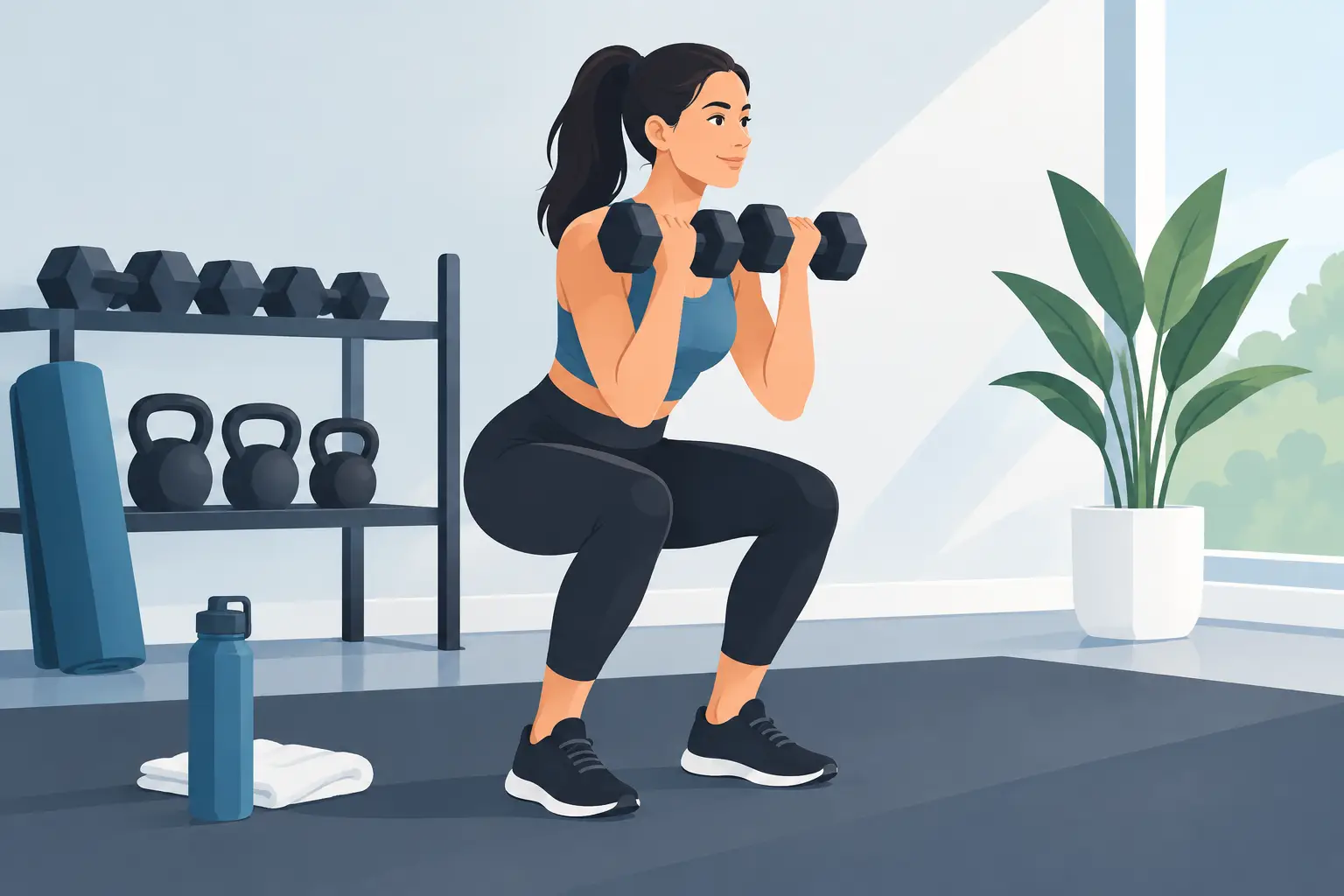
The first session should not leave you unable to walk for three days. It should leave you clearer on what your body can do, confident with a few key movements, and ready to train again. This beginner strength training guide is built around that idea: steady progress, good technique and a routine that fits real life in Barcelona or wherever you are training.
Strength training is not reserved for people who already know their way around a weights room. You can start in your living room with a chair, a resistance band and a pair of dumbbells, outdoors with bodyweight exercises, or in a gym. The location matters far less than having a sensible plan and following it consistently.
Why strength training is worth your time
Strength is useful well beyond the workout. It makes everyday tasks easier, from carrying shopping upstairs to improving posture after a long day at a desk. It can support body-composition goals, help protect muscle while losing fat, and build the confidence that often comes from feeling physically capable.
For runners, cyclists and busy professionals alike, strength work also fills gaps that cardio alone may not address. Stronger legs, hips, trunk and upper body can improve resilience and control. It is not a magic fix for every ache or injury, but a well-designed programme gives your body more capacity to handle the demands you place on it.
The trade-off is that strength takes patience. You will not need punishing daily sessions, expensive equipment or complicated exercise variations. You do need regular practice, enough recovery, and the discipline to focus on form before chasing heavier weights.
Beginner strength training guide: start with movement quality
Before worrying about calories burned or how much weight you lift, learn the main movement patterns. Nearly every useful beginner programme includes a squat, a hip hinge, a push, a pull and a way to stabilise your trunk.
A squat might begin with sitting down to a chair and standing back up. A hip hinge could be a light Romanian deadlift, where you push your hips back while keeping the weight close to your legs. Push-ups can be done against a wall, kitchen counter or bench before progressing to the floor. For pulling, a resistance-band row is an excellent option when you do not have a cable machine. A plank, dead bug or suitcase carry can teach trunk control without endless crunches.
These exercises may look simple, but simple is not the same as easy. Move at a controlled pace. Keep your feet stable, avoid rushing the lowering phase, and stop a set when technique begins to slip. Mild muscle effort is expected. Sharp pain, joint pain or dizziness is a reason to stop and seek appropriate advice, particularly if you have an existing condition or have been inactive for a long time.
If you are unsure what good form feels like, coaching can shorten the learning curve considerably. A trainer can adjust your stance, range of movement, tempo and exercise selection to suit your mobility, confidence and available equipment. That personal attention is especially valuable when training at home, where there may be no mirror, machines or staff nearby.
A realistic first programme
Train two full-body sessions each week for your first six to eight weeks. Leave at least a day between them where possible. This frequency gives you enough practice to improve without turning your new routine into another demanding commitment you cannot sustain.
Start each session with five to ten minutes of easy movement: a brisk walk, cycling, marching on the spot, or mobility work for the areas that feel stiff. Then work through the following exercises:
- Squat to a chair or goblet squat: 2 to 3 sets of 8 to 12 repetitions.
- Romanian deadlift with dumbbells, kettlebell or band: 2 to 3 sets of 8 to 12 repetitions.
- Incline push-up or dumbbell floor press: 2 to 3 sets of 6 to 12 repetitions.
- Resistance-band row or one-arm dumbbell row: 2 to 3 sets of 8 to 12 repetitions on each side.
- Dead bug, plank or loaded carry: 2 to 3 controlled sets.
Rest for roughly 60 to 90 seconds between sets. If you are breathing hard, take longer. Strength training is not a race, and better rest often means better repetitions.
Choose a resistance that feels challenging near the end of the set while leaving around two or three good repetitions in reserve. In plain terms, you should feel that you could do a little more, but not a lot more. Going to complete failure is unnecessary for a beginner and can make recovery harder than it needs to be.
How to make progress without overcomplicating it
Progressive overload simply means asking your body to do slightly more over time. It does not always mean adding lots of weight. You might first add one or two repetitions with the same dumbbells. Then add a set, slow the lowering phase, improve your range of movement, or use a heavier band.
Keep a basic note on your phone after each workout. Record the exercise, weight or band used, repetitions completed and how it felt. This is far more useful than relying on memory. After a few weeks, you will be able to see whether you are genuinely progressing or just repeating the same session.
Do not force progress every workout. Sleep, work stress, travel, menstrual cycle changes and a busy week can all affect performance. On those days, maintain the habit, reduce the load slightly, and focus on clean movement. Consistency over months beats a perfect plan followed for ten days.
Eating and recovering for strength
You do not need to earn your meals through exercise or follow a restrictive diet to begin training. Your priority is regular, nourishing meals that support your energy and recovery. Include a source of protein at each meal, such as eggs, yoghurt, fish, lean meat, tofu, beans or lentils, alongside fruit and vegetables, carbohydrates and healthy fats.
Protein helps support muscle repair, but the whole picture matters. If you train after work and have eaten very little all day, your session will usually feel harder. If your goal is fat loss, a moderate and sustainable calorie deficit can work well, but aggressive dieting often reduces training performance and makes adherence more difficult. The right approach depends on your starting point, goals and lifestyle.
Aim for good sleep where you can, drink enough water, and keep low-intensity movement in your week. Walking is one of the best additions to a beginner strength plan because it supports general fitness without competing heavily with recovery.
Common mistakes that slow beginners down
The biggest mistake is trying to copy an advanced programme. High-volume bodybuilding splits, daily high-intensity circuits and complicated Olympic lifts can have a place later, but they are rarely the fastest route to early confidence. Your first job is to build a base.
Another common issue is changing the plan every week. New exercises can be enjoyable, but too much variety makes it difficult to practise skills and measure progress. Stick with your core movements long enough to improve them. Small adjustments are sensible; constant reinvention is not.
Finally, do not wait to feel motivated before you train. Motivation is useful, but it comes and goes. Put two sessions in your diary, make them short enough to fit your working week, and treat them as an appointment with yourself. Training with a partner or in a small group can add accountability, provided the session is still adapted to your own level.
Make your plan fit your life
The best programme is not necessarily the one with the most exercises. It is the one you can perform safely and repeat consistently. A home-based plan may suit a parent with limited time. Outdoor training can be ideal if you spend all day indoors. Remote coaching can give frequent travellers a structure they can take from hotel gym to living room without starting again each week.
At AB Fitness, I build programmes around the person in front of me: their goal, schedule, training history, injuries, equipment and confidence level. That might mean helping a complete beginner learn the basics at home, coaching a couple outdoors, or providing an online plan with clear check-ins and progression.
Start with two sessions this week, not an imaginary perfect routine next month. Learn a few movements well, leave a little energy in the tank, and give yourself enough time for strength to become part of who you are.