
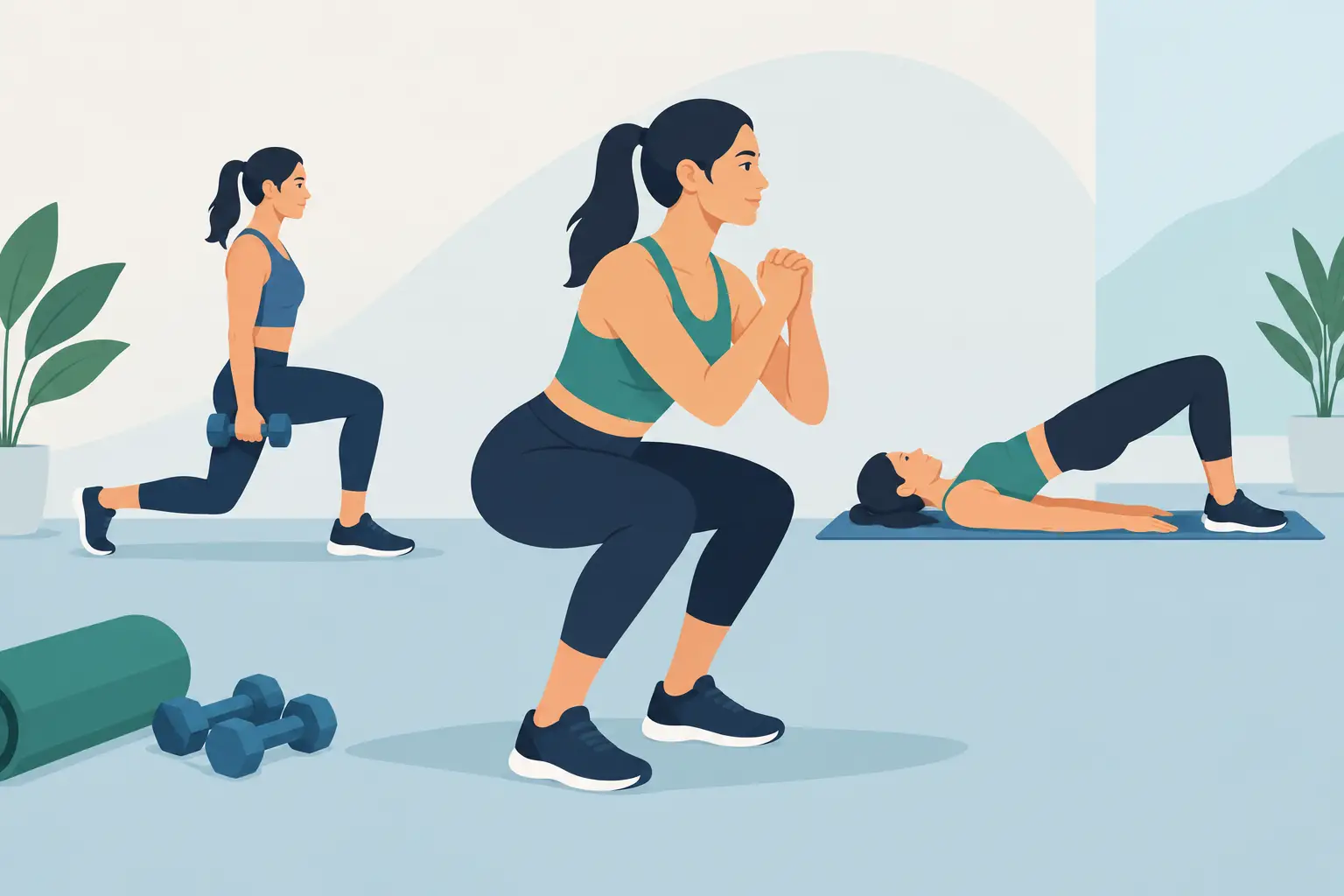
A hard session should leave you feeling worked, not worried about your knees, back or ankles the next morning. The best low impact strength exercises let you train with intent while keeping impact and unnecessary joint stress under control. They are ideal if you are returning after time away, training around a niggle, building confidence at home, or simply want strength work that supports running, cycling and everyday life.
Low impact does not mean low effort. You can still build muscle, improve posture, develop a stronger core and make your legs properly work. The difference is in how you load the movement, control the tempo and choose exercises that suit your body rather than copying the hardest workout on social media.
What low impact strength training really means
Low impact refers mainly to the absence of repeated pounding: jumping, sprinting, landing and rapid direction changes. It does not mean every exercise is easy, nor does it guarantee that every movement is right for every injury. A slow split squat can be extremely demanding. A heavy resistance-band row can challenge your upper back without putting any impact through your joints.
For most people, the aim is simple: use stable positions, move well through a comfortable range and make gradual progress. That might mean adding a little resistance, completing an extra repetition, improving your control or shortening your rest. These are all valid ways to get stronger.
If you have sharp pain, swelling, a recent injury or a medical condition affecting exercise, get individual advice before training. Do not try to push through joint pain to prove commitment. Productive effort feels different from pain.
The best low impact strength exercises for full-body results
You do not need a gym full of machines to make these exercises effective. A chair, a resistance band, a pair of dumbbells or a loaded backpack can take you a long way. Start with bodyweight if you are new, then increase the challenge slowly.
1. Box squat or chair squat
Sit back towards a chair, lightly touch it with your hips, then stand tall by driving through your feet. This is one of the best ways to learn a squat pattern with confidence, especially if depth or balance is currently limiting you.
Keep your chest proud, knees tracking in line with your toes and weight spread across the whole foot. Make it harder by holding a dumbbell at your chest or slowing the lowering phase to three seconds. If your knees dislike a deep squat, use a higher chair and work within a pain-free range.
2. Glute bridge
Lie on your back with bent knees and feet flat on the floor. Brace your stomach gently, squeeze your glutes and lift your hips until your body forms a long line from shoulders to knees. Pause at the top rather than rushing through the repetition.
Glute bridges strengthen the hips with very little load on the knees or spine. They are particularly useful for people who sit for long hours or runners who need stronger posterior-chain support. Progress to a dumbbell bridge, a band around the knees or, later, a single-leg variation if your pelvis stays level.
3. Supported split squat
Hold a wall, door frame or sturdy chair for balance, take a comfortable staggered stance and lower your back knee towards the floor. The support lets you focus on leg strength rather than wobbling around the room.
This exercise develops each leg separately, which can expose and improve left-to-right differences. Keep the range shallow at first if necessary. A longer stance usually brings more glute involvement, while a slightly shorter stance can place more emphasis on the front thigh. Neither is automatically better – the best choice is the one you can control comfortably.
4. Step-up
Use the bottom stair or a stable low platform. Place one whole foot on top, press through that foot and stand up without bouncing off the trailing leg. Step down slowly and repeat before changing sides.
Step-ups are practical strength training. They carry over to stairs, hills and daily movement, while the low platform keeps the impact minimal. Begin lower than you think you need to. Quality matters more than height, particularly if your knee caves inwards or your hips drop to one side.
5. Incline press-up
Place your hands on a kitchen worktop, solid table, bench or wall and walk your feet back into a straight-body position. Lower your chest towards your hands, then press the surface away. The higher the surface, the easier the exercise.
Incline press-ups build chest, shoulder, triceps and core strength without requiring you to start on the floor. They are more adaptable than many people realise. Once you can complete clean sets, lower the hand position gradually until a floor press-up becomes realistic.
6. Resistance-band row
Anchor a band securely at chest height, or loop it around a stable post. Pull your elbows back towards your ribs, squeeze between your shoulder blades and return with control. Avoid shrugging your shoulders towards your ears.
Rows balance pressing work and strengthen the upper back muscles that help you sit and stand taller. For home workers, this is often a non-negotiable movement. Use a band tension that lets you pause briefly at the squeezed position without twisting your torso.
7. Dumbbell floor press
Lie on the floor holding dumbbells, water bottles or a loaded backpack above your chest. Lower the weight until your upper arms touch the floor lightly, then press back up. The floor limits the range naturally, making it a good option for many people who find deep pressing uncomfortable at the shoulder.
Move both arms together at first. When that feels stable, alternating sides can add a useful core challenge. Keep your ribs down rather than arching your lower back to force the weight up.
8. Romanian deadlift
Hold weights close to your thighs, soften your knees and send your hips backwards as though closing a car door behind you. Keep your back long, feel the stretch through the hamstrings, then stand by squeezing your glutes.
This is not a squat. Your hips travel back more than your knees travel forwards. Done well, the Romanian deadlift strengthens the hamstrings, glutes and back without impact, and it teaches a movement pattern that makes lifting shopping bags and suitcases safer. Start light and prioritise position over load.
9. Dead bug
Lie on your back with arms pointing towards the ceiling and knees above your hips. Slowly lower the opposite arm and leg away from each other, then return and switch sides. Your lower back should stay gently connected to the floor throughout.
A dead bug may not look dramatic, but it teaches your trunk to resist unwanted movement. That control supports squats, running, carrying and nearly every other strength exercise. If it feels too difficult, move only the legs or only the arms until you can maintain good form.
10. Suitcase carry
Hold one dumbbell, kettlebell or heavy bag by one side and walk slowly with tall posture. Do not lean away from the weight or let it pull your shoulder down. Switch hands after each set.
Carries develop grip, core stability and upper-body control in a way that feels very relevant to real life. They work well in a corridor, park or living room. Choose a load that challenges your posture but does not turn the walk into a sideways shuffle.
How to turn low impact exercises into a proper workout
Pick one squat or single-leg movement, one hip exercise, one push, one pull and one core or carry exercise. For example, you could use chair squats, glute bridges, incline press-ups, band rows and dead bugs. Complete two or three sets of eight to 12 controlled repetitions for each movement, resting for around 45 to 90 seconds as needed.
Carries work best by time or distance: try 20 to 40 seconds per side. Train two or three times each week, leaving at least a day between full-body sessions when you are starting out. If you finish every set with plenty left in the tank, add a repetition, slow the tempo or use slightly more resistance next time.
Your programme should reflect your goal. Someone preparing for a 10K may use these movements to support their running without adding more impact. Someone focused on body composition may pair them with regular walking, sensible nutrition and progressive resistance. Someone rebuilding confidence after a long break may need fewer exercises, more coaching on technique and a slower start.
At AB Fitness, I use low impact strength work regularly in home, outdoor and remote programmes because it meets people where they are, then gives them a clear route forward. You do not need to be punished by a workout to earn results. Start with movements you can own, practise them consistently and let your strength build week by week.