
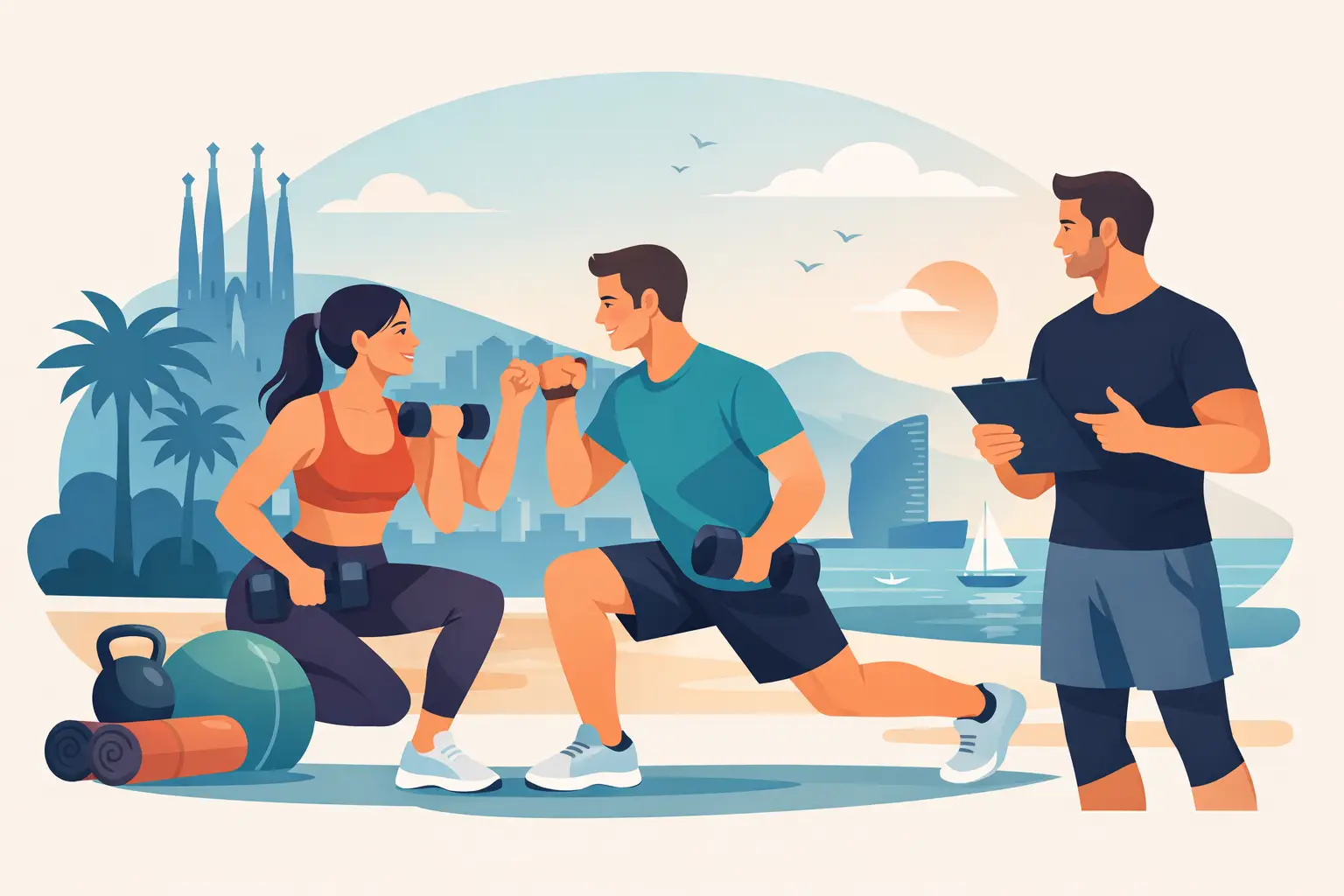
Training together can be one of the best ways to make exercise stick – provided you are not simply doing the same workout beside each other. Personal training for couples Barcelona should give both of you a clear plan, proper coaching and the push to turn good intentions into a routine you can maintain.
For many couples, the problem is not a lack of motivation. It is finding time that works around demanding jobs, travel, family commitments and Barcelona life. A shared session removes one diary negotiation, gives you an appointment to keep, and makes progress something you actively support in each other.
Why couples train better with the right structure
A partner can be your best training ally. You have someone who understands when the week has been busy, celebrates the small wins, and is there when you would otherwise cancel. That shared accountability is powerful, but it only works if the sessions are built around both people rather than one person setting the pace.
You may have completely different starting points. One of you might want to improve body composition and feel stronger; the other may be preparing for a 10K, returning to exercise after a long break, or keen to reduce stress. There is no need to choose a single goal. A good coach can run one session with different exercises, loads, rep ranges and progressions while keeping you working together.
That is the difference between tailored couples training and following a generic online circuit. You still share the effort, energy and encouragement, but the programme respects your individual fitness, movement quality and confidence.
Personal training for couples in Barcelona, built around real life
The best training location is usually the one you will use consistently. That could be your home, a nearby park, the beach promenade or an outdoor space close to work. Mobile coaching removes the time lost travelling to a gym, waiting for equipment and fitting your day around a fixed class timetable.
I train couples across Barcelona in a way that makes the session practical from the start. If you have a flat with limited space, we can use bodyweight work, resistance bands, dumbbells, TRX and intelligent conditioning. If you prefer the outdoors, we can combine strength, running drills, intervals and mobility work. If one of you travels frequently, a remote programme can keep both of you aligned between face-to-face sessions.
You do not need matching fitness levels or a home gym. You need a plan that uses the time, space and equipment available well. For some couples, two sessions a week is the right foundation. For others, one coached session plus individual workouts and a simple nutrition structure provides better value and more flexibility.
What a shared session actually looks like
A session begins with a warm-up that prepares each of you for the work ahead, not a rushed few minutes on a treadmill. I watch how you move, adjust technique, and select exercises that fit your ability and goals.
From there, you might train in alternating sets. While one person completes a controlled strength exercise, the other works on a complementary movement or rests with purpose. This keeps the session moving without forcing either of you to lift the same weight or perform the same variation.
You may both do squats, for example, but one person could use a box squat to build confidence and control while the other works with heavier dumbbells or a more demanding tempo. The programme is shared, not identical. That approach keeps training enjoyable without compromising progress.
Goals that work well for couples coaching
Couples often come to me with a broad aim such as getting fitter, losing weight or feeling healthier. Those are worthwhile starting points, but they become more useful when we turn them into specific actions. We can build strength, improve posture after long hours at a desk, develop running fitness, prepare for an event, or create a routine that feels sustainable rather than restrictive.
Body composition goals are common, and they require honesty. Training hard together will help, but it cannot fully compensate for inconsistent eating, poor sleep or an all-or-nothing approach at weekends. This is where bespoke nutrition guidance matters. You do not need to eat identical meals or follow a rigid plan that makes social life difficult. You need a structure that suits your preferences, schedule and target while making better choices easier most of the time.
For active couples, training can also be a route towards a shared challenge. Whether that is a local race, a hiking holiday, a charity event or simply being able to enjoy a long bike ride without feeling exhausted, a focused programme gives you something positive to work towards together.
The trade-off: training together is not always easier
Couples training has real advantages, but it should not become an excuse to compare yourselves. Progress rarely happens at the same speed. One person may gain strength quickly, while the other sees bigger improvements in mobility, running pace or energy levels. Comparing the numbers can take the enjoyment out of what should be a constructive habit.
It also depends on how you like to be coached. Some couples love friendly competition. Others prefer calm encouragement and separate targets. I establish this early, so the training environment supports both of you. The aim is not for one partner to become the other’s coach. My job is to give clear direction, challenge you appropriately and keep the session focused.
There are times when separate training is the better option too. If you have highly specialised sport goals, significant differences in availability, or one person needs rehabilitation-focused work, individual sessions may be more effective. We can still create a wider plan that helps you train around each other.
Make your progress continue between sessions
One good session each week is valuable, but results build through what happens on the other days. I will give you realistic training actions rather than an overwhelming schedule that disappears after two weeks. That might mean a pair of short strength sessions at home, a weekend run at your own pace, daily mobility work, or a step target that fits your working day.
The same applies to food. Couples can make consistency much easier by planning a few dependable meals, keeping useful ingredients at home and agreeing how to handle restaurant meals, holidays and busy periods. Perfection is not the target. A repeatable routine is.
At AB Fitness, I combine the detail of individual coaching with the energy of training as a pair. My background in endurance sport, strength work, martial arts and conditioning helps me adapt sessions for beginners, experienced exercisers and couples with very different ambitions. You will be coached in English, French or Spanish, with a clear programme and direct accountability throughout.
Choosing the right coach for both of you
Before starting, look for a trainer who asks questions rather than immediately prescribing a tough workout. You should discuss your health history, training experience, lifestyle, goals, availability and any injuries or concerns. A proper assessment gives us a safer, more effective starting point.
You should also expect the programme to change. As your strength improves, work pressures rise or a race approaches, training needs to respond. The right plan is not fixed in advance. It develops with you, while still giving you enough structure to measure progress.
Most importantly, choose coaching that makes you feel capable. You should finish a session knowing you have worked, learnt something and moved forward – not feeling that fitness is reserved for people who already know what they are doing.
Your next session does not need to be a dramatic reset. Put a time in both calendars, start from where you are, and let the consistency you build together do the heavy lifting.