
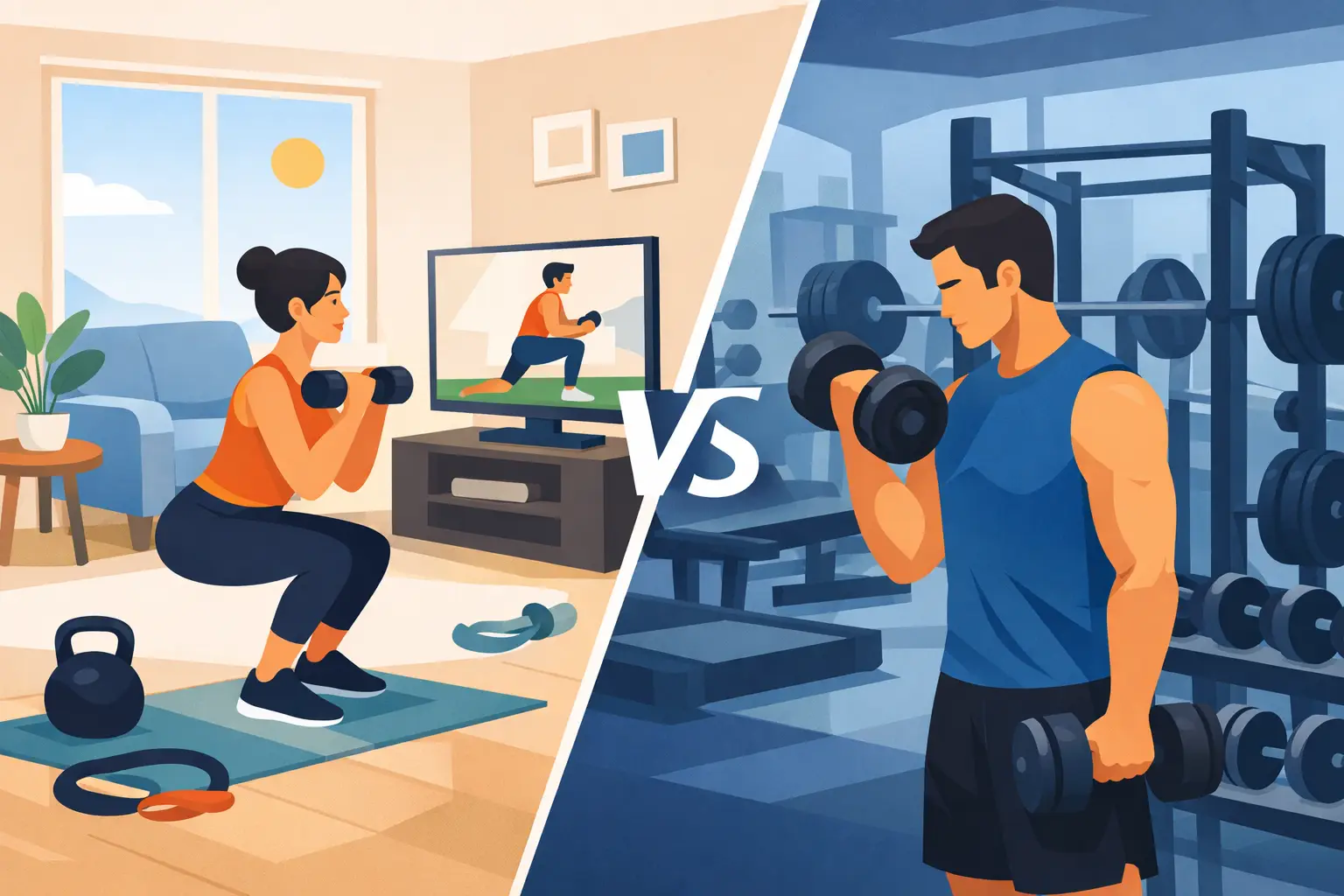
A busy week can make the difference between a planned workout and no workout at all. That is why home training versus gym training is rarely just a question of equipment. It is a question of what you can realistically repeat when work runs late, travel gets in the way, or motivation is lower than usual.
For some people, the gym provides energy, structure and access to heavy kit. For others, the journey there becomes the reason they stop. The best choice is not the one that looks most impressive on social media. It is the one that gives you enough challenge, guidance and consistency to make measurable progress.
Home Training Versus Gym Training: The Real Difference
A gym gives you a dedicated environment. You arrive, change, train and leave. There are machines, barbells, cardio equipment and, often, other people working hard around you. If you enjoy that atmosphere and can visit regularly, it can be a very effective place to build strength, fitness or muscle.
Home training removes the commute and makes exercise fit around your actual life. A focused session in your living room, building, terrace or nearby park can be more productive than a gym session that takes two hours door to door. This matters especially for professionals in Barcelona with demanding schedules, parents fitting training around family life, or anyone who finds a crowded gym more distracting than motivating.
The trade-off is simple. At home, you must create the structure that a gym provides automatically. You need a clear plan, a suitable training space and enough intent to begin when the sofa is close by. With the right programme and accountability, however, home training is not a watered-down option. It is a practical training format that can deliver serious results.
When Gym Training Has the Advantage
Gym training is hard to beat when your goal requires a lot of load. If you want to develop maximum strength in barbell squats, deadlifts or presses, regular access to racks, plates and benches makes progressive overload easier. The same applies if you enjoy using a wide range of resistance machines or need specialist equipment for bodybuilding-focused training.
A gym can also help if your home is very small, your flatmates make training awkward, or you prefer separating exercise from the rest of your day. Some people switch on the moment they walk through the door. That ritual has value. You may also enjoy the social side of a class, a training partner or simply being around others who are making an effort.
But gym access alone does not create progress. It is easy to wander between machines, repeat the same comfortable weights for months or skip sessions because the gym feels too busy. Equipment gives you options. A well-designed programme tells you what to do with them.
The gym suits you well if you need heavy equipment
Choose a gym-first approach if you are an experienced lifter chasing specific strength numbers, preparing for a physique competition, or training in a way that genuinely depends on specialist kit. It may also be the right choice if the gym is close to home or work and you already have a reliable routine.
The key question is not whether a gym is objectively better. Ask whether you will use it three or four times a week, consistently, for the next six months.
Why Home Training Can Produce Better Consistency
Home sessions work because they reduce friction. You do not need to pack a bag, wait for a machine, travel across town or find a parking space. You can train for 35 minutes before work, move through a strength session while dinner is in the oven, or fit mobility work around a busy day without turning it into another appointment.
That convenience is powerful, but the session still needs purpose. Effective home training is built around progressive overload, good movement quality and a realistic schedule. You can make significant improvements using bodyweight, resistance bands, adjustable dumbbells, kettlebells, a TRX or a simple bench. Tempo, range of motion, unilateral exercises, rest periods and total training volume all create ways to progress without filling your home with gym equipment.
For a beginner, home training can be less intimidating than walking into a large gym without knowing where to start. For someone returning after injury, illness or a long break, it provides a controlled environment where confidence can grow. For experienced clients, it can become a highly efficient complement to running, cycling, martial arts or a demanding work schedule.
Home does not mean easier
Training at home should not mean doing random online workouts until you are tired. A useful plan sets a goal for each session. You might be building lower-body strength, improving posture after long hours at a desk, preparing for a 10K, or reducing body fat while keeping muscle.
The exercises, sets, repetitions and recovery should reflect that goal. If your form needs attention, a coach can correct it in person or through video feedback. If you have plateaued, the plan should change rather than simply adding more sweat and more confusion.
Coaching Changes Both Options
The strongest argument is not really home against gym. It is coached, purposeful training against unstructured training.
A personal trainer can make a home session challenging with limited equipment, while a trainer in a gym can stop you hiding behind familiar machines. Good coaching starts by understanding your current fitness, injury history, training experience, schedule and priorities. It then turns those details into a programme you can follow.
This is where personal attention matters. One client may need a straightforward three-day strength plan and nutrition habits that work around office lunches. Another may need running sessions, mobility and strength work for a race. A couple training together may need shared sessions with different loads and progressions. A generic app cannot watch how you move, ask why you missed a session or adjust the plan after a difficult week.
At AB Fitness, I train clients at home, outdoors and remotely because the setting should serve the person, not the other way round. Whether we use dumbbells in your flat, bodyweight circuits in a park or a full gym setup, the standard stays the same: train with intent, track progress and build a routine you can maintain.
Consider Your Goal, Space and Personality
Before choosing, be honest about what has stopped you in the past. If you repeatedly pay for a gym membership but rarely attend, convenience may be your missing piece. If home is full of distractions and you thrive on a dedicated training space, the gym may give you the focus you need.
Your goal matters too. General strength, fat loss, mobility, fitness and endurance can all be developed very effectively at home or outdoors. Maximal strength and highly specialised physique goals usually benefit from gym equipment, although home sessions can still support them.
Do not underestimate personality. Some people need privacy before they feel comfortable exercising. Others need a coach waiting for them or a room full of people training hard. Neither preference is a weakness. It is useful information that helps you build a plan you will actually follow.
A Hybrid Approach Often Makes Sense
You do not have to choose one setting forever. Many clients get the best result from combining them. Two home strength sessions can keep the week moving, while one gym session focuses on heavier lower-body work. Runners may complete mobility and strength at home, then use outdoor sessions for race-specific conditioning. When travelling, a remote plan keeps the routine alive without needing to find a new gym in every city.
This flexibility protects consistency. Missing one gym visit no longer means writing off the whole week. You have another option, a clear session and a reason to keep going.
The best training environment is the one that makes you show up, work with good technique and progress from month to month. Start with the setup that removes the biggest barrier in your life, then give it enough structure to prove what you can do.