
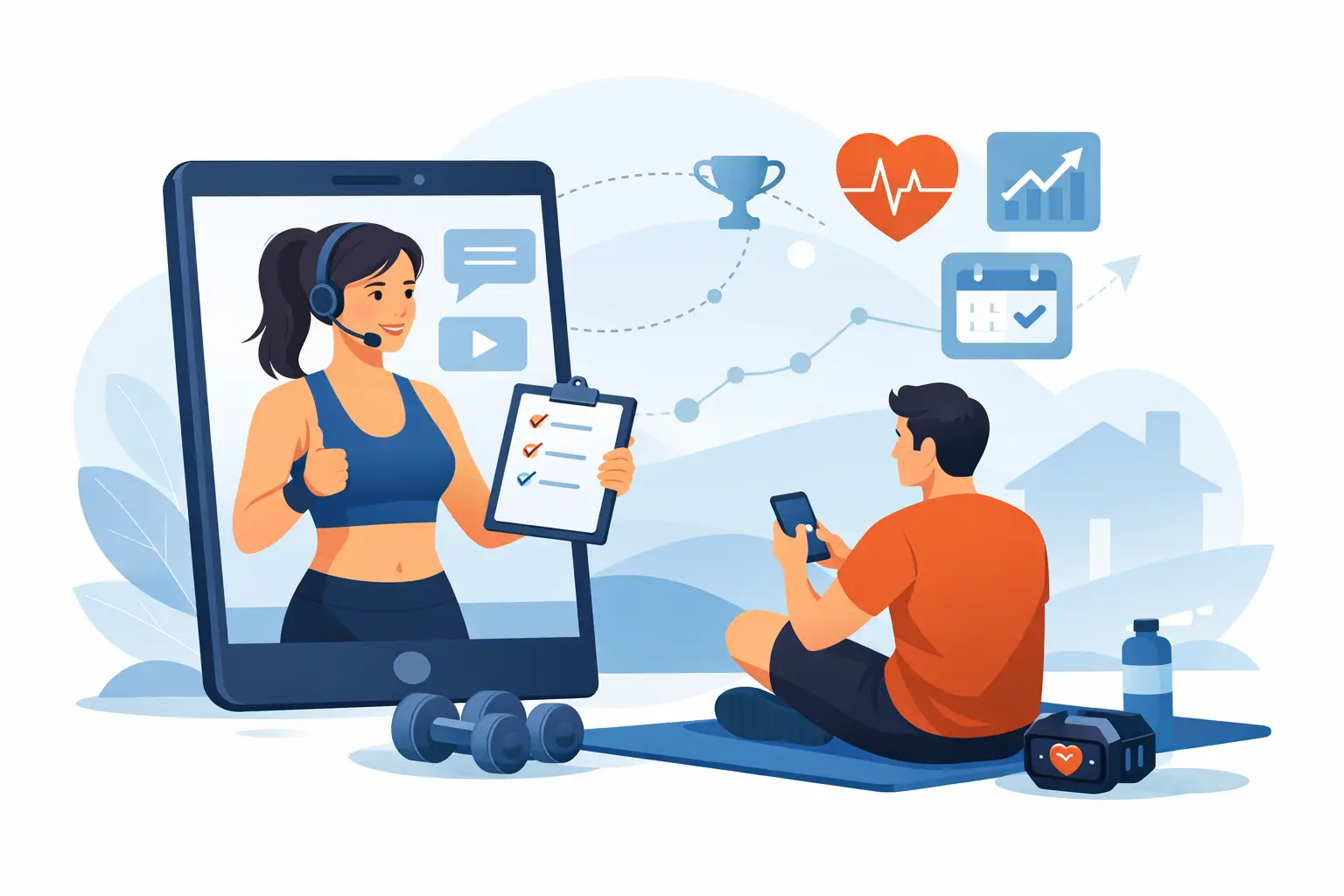
The missed workout is rarely about laziness. More often, it is a busy week, a work trip, a plan that no longer fits, or the feeling that you are not quite sure what to do next. An accountability fitness coach online gives you a person in your corner when motivation dips, not just another workout to save and forget.
I work with people who want training to fit around real life: long working days, family commitments, travel, a small space at home, or a preference for training outdoors rather than joining a gym. The aim is not to demand perfection. It is to build a routine you can keep, then keep progressing with.
What online fitness accountability actually means
Accountability is more than a weekly message asking whether you exercised. Good coaching creates a clear agreement: you tell me what you want to achieve, I build the structure around your starting point and schedule, and we both pay attention to what happens between check-ins.
That might mean improving strength and body composition, returning to exercise after a long break, preparing for a 10K or marathon, or simply feeling more energetic and confident. Your programme should reflect your goal, your equipment, your current fitness and the time you genuinely have available. A four-day gym plan is not helpful if you can realistically train twice a week at home.
I then review your training, adjust the plan where needed and ask the useful questions. Did you complete the sessions? Were they too easy, too difficult or poorly timed? Is your shoulder uncomfortable? Are late meetings getting in the way? Progress comes from responding to those details early instead of abandoning the whole plan after one difficult week.
Why an accountability fitness coach online can work better than an app
Fitness apps can be useful for logging a run or finding a session when you need inspiration. The limitation is that an app cannot know that you slept badly, have been travelling, dislike burpees, or need to build confidence before walking into a busy weights area. It cannot decide whether you need encouragement, a firmer push or an easier week.
Online coaching gives you that human judgement without requiring you to be in one place. You can train in your Barcelona flat, a hotel gym, a local park, your workplace, or at home while visiting family. Your plan travels with you, but it is not fixed in stone.
There is also a difference between being watched and being supported. I am not interested in making clients feel guilty for having a life. I am interested in helping them make the next sensible decision. If a planned 45-minute workout becomes 20 minutes, we can still make those 20 minutes count. If a week goes off track, we reset quickly rather than treating it as failure.
The right amount of pressure
Some people need frequent contact at the beginning because consistency is their biggest challenge. Others are already disciplined and mainly need an experienced coach to programme their sessions, review their form and keep their training moving forward. The right level of accountability depends on you.
What should stay consistent is honesty. I need a realistic picture of what you are doing, eating and recovering from. In return, you get clear feedback and a programme designed for your actual circumstances, not an imaginary perfect week.
What a tailored online coaching plan includes
A strong remote plan begins before the first workout. I want to understand your training history, injuries or limitations, work pattern, preferred activities, available equipment and main goal. An experienced runner preparing for a race needs something very different from a beginner who wants to feel stronger and lose body fat.
Your programme may include strength training, bodyweight conditioning, running sessions, mobility work or cardio. If you train at home, I can build effective sessions around dumbbells, resistance bands, a TRX, a bench or no equipment at all. If you have access to a gym, we can use it properly rather than wandering from machine to machine.
Nutrition support should be practical too. Extreme meal plans are difficult to maintain and often create an all-or-nothing approach. Instead, I help clients organise meals around their goal, appetite, schedule and preferences. That can mean improving protein intake, planning lunches for office days, making better choices while travelling, or creating a simple routine that removes daily guesswork.
For endurance clients, the detail matters even more. Running preparation needs a sensible blend of easy mileage, quality sessions, strength, recovery and fuelling. Having completed marathons, Ironman triathlons and training across several sports, I know that enthusiasm alone does not prepare you for race day. A good plan builds fitness steadily while respecting the demands of the rest of your life.
How check-ins turn plans into progress
Check-ins are where the programme becomes coaching. Depending on your needs, we review completed sessions, energy levels, body measurements or performance markers, nutrition habits and any barriers that appeared during the week. The purpose is not to collect data for its own sake. It is to spot patterns and make useful changes.
Perhaps your sessions are being skipped because they are scheduled after work, when your energy is lowest. Moving them to the morning, shortening one session or preparing your kit the night before may solve more than adding another motivational quote ever could.
Perhaps you are training consistently but have stopped progressing. We can look at exercise selection, load, repetitions, recovery and food intake. Or perhaps you are doing too much too soon and need a more controlled approach. Being accountable includes knowing when to hold back, especially when an injury or burnout would set you back further.
Direct feedback, without the gym pressure
Many people want expert guidance but do not enjoy the atmosphere of a conventional gym. Online coaching removes the commute and the feeling that everyone is watching, while still giving you a clear training standard.
Video can be used to review key movements and improve technique. I can help you make adjustments to a squat, press, hinge or running drill, then explain why the change matters. You do not need to be an athlete to benefit from good technique. It makes training safer, more efficient and easier to build on.
For some clients, online coaching also works alongside in-person sessions. At AB Fitness, I can train clients face to face in Barcelona and provide a structured remote plan for the days between sessions or for time spent away. That combination suits people who value hands-on coaching but want their routine to continue wherever they are.
Who gets the most from online accountability?
Online coaching is particularly effective if you know what to do in theory but struggle to follow through alone. It also suits busy professionals, parents, frequent travellers and people who feel overwhelmed by generic programmes. You do not need a home gym, a dramatic transformation goal or a perfect diary to begin.
It can be a very good fit for couples or friends too, provided each person still receives an appropriate plan. Shared training can make sessions more enjoyable, but fitness levels, injury history and goals are rarely identical. Personalisation should not disappear just because you train together.
There are situations where online coaching is not the complete answer. If you have a new or serious injury, you may need assessment from a qualified healthcare professional before training. If you are brand new to resistance exercise and feel anxious about movement, an in-person session can be the quickest way to learn foundations. Remote coaching can still support you, but the format should match your confidence and needs.
How to get more from your coach
The clients who make the best progress are not always the most naturally motivated. They are usually the ones who communicate. Tell your coach when a session feels wrong, when work becomes intense, when you are going on holiday, or when your goal changes. A plan can only be tailored when it has accurate information.
Give your training a regular place in the week, even if the time changes. Treat it like an appointment with yourself rather than something you will do if the day becomes unusually quiet. Keep the first target manageable. Two completed sessions every week for a month will do more for your fitness than an ambitious plan followed for six days.
Most importantly, do not wait for motivation to arrive before you start. Motivation often follows action. Put on your trainers, complete the first set, send the check-in and let the routine do its job. With the right guidance and honest accountability, progress becomes something you practise, not something you hope for.