
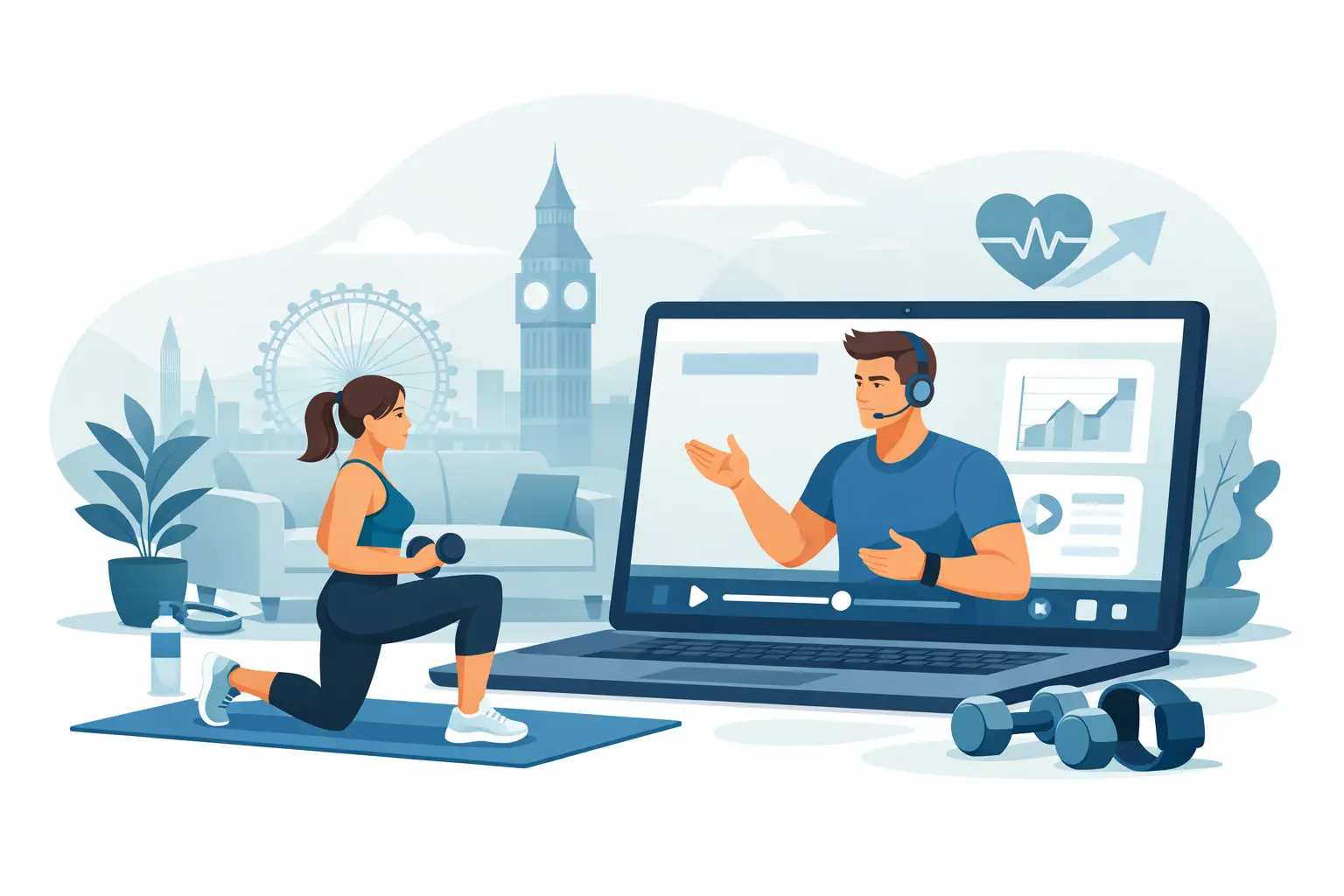
A workout saved on your phone is not the same as a plan built around your life. If you are looking for an online personal trainer UK clients can work with consistently, you need more than a library of exercises and an occasional automated message. You need a coach who understands your goal, checks how you are progressing and adjusts the plan when work, travel, family life or motivation gets in the way.
Online coaching should make training easier to follow, not easier to ignore. Whether your aim is to feel stronger, lose body fat, prepare for a race or simply build a routine that lasts, the right structure turns good intentions into measurable progress.
What UK Clients Need From an Online Personal Trainer
The best online coaching is personal in the practical sense. Your programme should reflect your starting point, training history, schedule, available equipment and the things you genuinely enjoy doing. A beginner training in a small flat needs a different approach from an experienced runner building towards a marathon. Neither needs a generic six-week challenge copied from social media.
I start by understanding where you are now and where you want to be. That includes your current activity levels, injuries or limitations, confidence in the gym, food habits and the time you can realistically commit each week. From there, we build a programme that challenges you without making every session feel impossible to fit in.
For many clients, the real value is accountability. It is easy to tell yourself you will restart on Monday. It is much harder to drift for weeks when your coach is checking in, reviewing your sessions and helping you deal with the inevitable difficult patch. Progress does not depend on perfect weeks. It depends on responding well when life is less organised than planned.
How Online Coaching Works in Real Life
Remote personal training is not one fixed service. It should adapt to the way you train and communicate best. You may prefer a clear weekly plan to complete independently, regular video calls to review technique, or a closer level of contact while you establish new habits. The format can change as your confidence grows.
Your training plan will set out what to do, how to do it and how to progress. Rather than repeatedly guessing whether you should add weight, run further or change your workout, you have a clear direction. I review your feedback and results, then make sensible adjustments. If a movement causes discomfort, an exercise is too easy, or your diary becomes busier, the programme changes with you.
Nutrition coaching is approached in the same way. Extreme restrictions may create quick initial results, but they rarely support a normal working life, weekends with friends or long-term performance. A useful nutrition plan gives you structure around meals, protein, portions and consistency while leaving room for real life. The aim is to make better decisions more often, not to make food stressful.
At AB Fitness, I coach clients remotely in English, French and Spanish, so location does not have to limit access to direct, personalised support. UK clients can train from home, a local gym, outdoors or while travelling, with a programme that remains focused on their own targets.
Who Benefits Most From Remote Personal Training?
Online coaching works particularly well for people who do not want to rely on a fixed gym timetable. You might work long hours, travel regularly, live somewhere without a suitable trainer nearby or simply prefer to train privately. It is also a strong option if you have tried fitness apps and found that the novelty wore off before any meaningful routine was established.
Beginners often benefit because they receive a clear starting point. Instead of feeling overwhelmed by equipment, conflicting advice and complicated programmes, they can focus on a manageable number of movements and build confidence week by week. Form guidance and regular feedback help reduce the uncertainty that stops many people from getting started.
More experienced clients benefit differently. If you already train but have plateaued, your plan may need better progression, more purposeful recovery or a clearer performance target. Runners and endurance athletes, for example, need strength work, pacing, fuelling and recovery to support their race preparation, not just more miles. My background in marathons, Ironman triathlons, boxing, martial arts and bodyweight conditioning helps me look at the wider demands of your sport.
Online coaching is not always the best choice for every situation. If you are completely new to resistance training and feel anxious about technique, a few in-person sessions can be useful before continuing remotely. Equally, if you need hands-on rehabilitation following a serious injury, work with the appropriate medical professional first. Good coaching means knowing when to simplify, refer or use a blended approach.
What Makes a Programme Feel Personal?
A personalised programme is not just your name at the top of a PDF. It has a reason behind every session. Your training days are placed around your actual week. Exercises suit your equipment and ability. Progression is planned, but it is not rigid enough to ignore how you feel.
For someone aiming to improve body composition, that may mean three efficient strength sessions, daily movement targets and nutrition habits that can be maintained on busy weeks. For a client preparing for a half marathon, it could mean carefully organised running sessions, strength training for durability and honest recovery targets. For a parent short on time, it may mean shorter home workouts that still build strength and momentum.
The programme should also develop. Repeating the same session forever is not a plan. But changing everything every week is not intelligent either. I keep what is working, build on it and introduce change when it serves your progress. That is how you gain strength, improve fitness and develop the confidence to do more than you thought possible.
Four Questions to Ask Before You Commit
Before choosing an online coach, look beyond transformation photos and bold promises. Ask how your programme will be tailored, how often your progress will be reviewed, what support is available between check-ins and whether nutrition guidance is included. Those answers tell you far more about the service than a polished social media feed.
You should also ask whether the coach has experience with a goal like yours. That does not mean they need to have lived your exact life, but they should understand the demands of your target. A coach helping you train for a first 10K, build strength after years away from exercise or prepare for an endurance event needs to programme with care, not rely on a one-size-fits-all template.
Finally, consider communication. You should feel able to be honest when a week has gone badly, when motivation drops or when a session does not feel right. The coach-client relationship works when there is trust as well as standards. I will push you beyond the comfort zone that keeps you stuck, but I will also make sure the next step is realistic.
Build a Routine You Can Keep
The most effective online personal training does not demand that fitness becomes your entire identity. It gives you a structure that fits around your work, relationships and responsibilities while still asking you to show up. Some weeks will be excellent. Others will require a shorter session, a simpler meal plan and a decision not to give up because the routine was not perfect.
Start with the goal that matters to you now, then commit to the next session rather than worrying about the whole journey. With a tailored plan, direct support and consistent effort, progress becomes something you can build wherever you are.